Why a Dedicated Homework Corner Matters
Creating a dedicated kids homework corner setup gives children a clear signal that it is time to learn, not play. Even a small, predictable spot with a table, chair, and basic supplies can separate school tasks from the rest of home life. This “school space at home” supports a quiet study area where distractions are reduced and expectations are clear. Simple, calm surroundings make it easier to start assignments, shift into a focused mindset, and finish work without constantly moving around to find a place to sit or search for materials.
A consistent homework corner also supports healthy family study habits and a steady daily learning routine. When adults and children treat this area as the regular place for reading, writing, and reviewing lessons, it becomes part of the household rhythm, much like mealtimes or bedtime. Parents or caregivers can more easily check in, offer guidance, and model good work habits when everyone knows where learning happens. Over time, returning to the same quiet study space each day helps many children build independence, manage their time more realistically, and approach homework with a calmer, more organized attitude.
Choosing the Right Spot for a Quiet Study Space
When planning a kids homework corner setup, the location matters as much as the furniture. Look for a spot that is calm and predictable, even if your home is busy or small. Many families use a corner of the living room, a section of the dining table, or a short stretch of hallway wall instead of a separate room. The goal is to give your child a regular place for schoolwork, where they can sit comfortably, spread out a few materials, and quickly recognize that it is time to study.
Noise is usually the biggest challenge, so most quiet study space ideas focus on reducing distractions rather than finding total silence. Place the homework area away from the television, gaming devices, and the loudest traffic, like the entryway or kitchen at busy times. In shared spaces, a wall-facing surface with your child’s back to the room helps, and family conversations and phone calls can shift a little farther away during homework blocks. Small changes, like closing a nearby door or choosing a corner where sound does not echo, make the space feel calmer without cutting your child off from family life.
A focus friendly desk setup does not have to be fancy or expensive; it just needs to fit the spot and support concentration. Check that the surface is the right height, the chair is steady, and lighting is bright enough without glare from windows or screens. In tight areas, a slim desk, compact table, or fold-down wall-mounted surface can define the homework corner without taking over the room. Keeping only essential items on the desk and storing extras in a small caddy or bin nearby keeps the space organized and makes it easier for your child to sit down and get started each day.
| Home Location Scenario | Noise & Distraction Level | Supervision & Support | Space & Furniture Fit |
|---|---|---|---|
| Living room corner | Moderate, can be lowered with small changes | High, adults nearby | Good for slim desk or small table |
| Dining table section | Varies, calmer outside meal times | High during shared routines | Works for temporary caddy and movable supplies |
| Hallway nook or wall stretch | Low to moderate, away from main activity | Medium, quick check-ins possible | Best for wall-mounted or compact desk |
| Shared bedroom area | Low when siblings agree on quiet time | Medium, adult support slightly farther | Fits simple desk and small storage bin |
| Multiuse kitchen spot | High during cooking, quieter at set homework time | High when adults are cooking or nearby | Suited to fold-away surface and portable organizer |
Balancing Quiet, Supervision, and Everyday Family Life
In many homes, the ideal quiet study space exists only in theory, so aim for balance instead of perfection. Choose a spot where noise is usually moderate, such as a corner of the living or dining room away from the television and main walkways. Helpful Quiet Study Space Ideas include a small rug, soft chair, or fabric bulletin board to absorb sound, plus clear expectations with siblings about using calm voices during homework.
Kids often focus better when an adult is nearby, so supervision should feel friendly, not intense. Keep your own tasks, like cooking or sorting mail, close to the homework corner so you can check in briefly without hovering. Over time, build Family Study Habits with a regular start time, a clear end point, and a short wrap-up chat so homework feels like a natural part of daily family life.
Designing a Focus-Friendly Desk and Seating Setup
A thoughtful desk and seating arrangement sits at the heart of any kids homework corner setup. The space should feel inviting, calm, and clearly linked to learning, so your child connects it with schoolwork instead of play. Choose a relatively quiet spot away from busy walkways but still close enough for an adult to check in. This kind of quiet study space supports concentration while reassuring children they are not on their own. Even a small nook at the end of a hallway or a cleared section of the living room can work if you consistently use it for homework and reading.
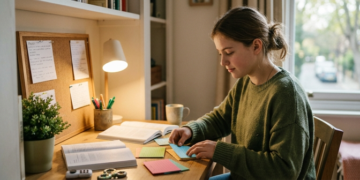
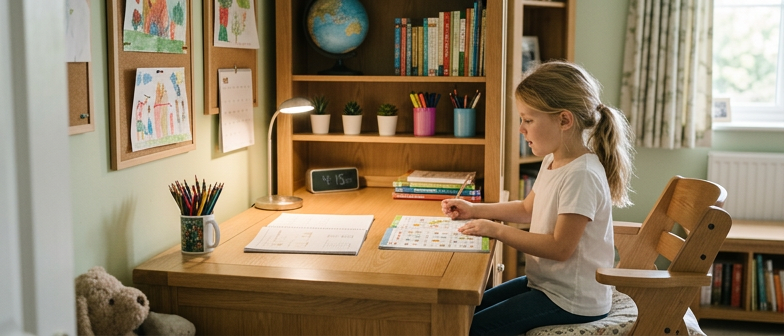
When planning a focus friendly desk setup, start with comfort and scale. A sturdy table or desk that matches your child’s height lets them sit with feet flat on the floor or a footrest, knees bent, and shoulders relaxed. A simple, supportive chair is enough as long as it encourages steady posture and does not wobble. If siblings share furniture, use cushions, seat pads, or boxes under feet to adjust the fit. Keep only essentials on the work surface, such as a pencil cup, notebook, and current assignments, so clutter does not compete for attention while they work.
Lighting turns a basic homework spot into a productive study zone. Aim for natural light during the day and a steady, warm lamp for evening, positioned to avoid shadows across the page. Harsh bulbs or screens facing the child can make focus harder, so gentle, indirect light is often better. In shared rooms, small touches like a focused desk lamp, soft chair cushions, or a simple divider or shelf can separate study from toys and television, signaling that this desk is a calm, dedicated place for learning.
Reducing Distractions in the Study Area
A focus friendly desk setup in any kids homework corner starts with clearing visual clutter so children are not tempted to play instead of work. Keep only what they need for the current task on the surface and store toys, craft kits, and extra gadgets on higher shelves or in closed bins. Choose calm, neutral, or soft colors around the desk rather than bright patterns, and avoid placing the workspace in front of a television or a busy hallway.
Digital distractions also need limits so the study spot stays welcoming but focused. Use a simple desk lamp instead of colorful, flashing lights, and plug chargers in slightly out of reach so devices are harder to grab during homework. When a computer or tablet is needed, agree that the screen is for school only during study time and keep it in full view of an adult so concentration feels calm and predictable.
Simple Ways to Organize School Supplies and Materials
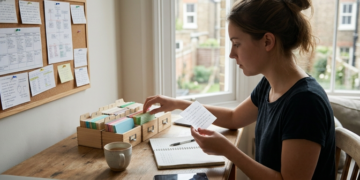
A child’s homework corner works best when supplies are easy to see, reach, and put away. Gather everything regularly needed for homework into one spot so the Kids Homework Corner Setup does not fill up with random items. Keep only basics such as pencils, erasers, a sharpener, colored pencils or markers, glue, scissors, and a small ruler. Store them in a simple caddy, basket, or divided box so the whole container can move to the table at homework time and be lifted away when the surface is needed for something else.
To keep study materials organized without constant adult help, use broad, easy categories instead of complicated systems. Label a few folders or magazine holders for current homework, finished work, and important school notices, using clear words or simple images for children still learning to read. Place these organizers on an open shelf or desk corner so papers do not pile up in the middle of the work surface. When children know exactly where worksheets, notebooks, and library books belong, it becomes natural for them to return items on their own.
For truly simple school supply organization, give every item in the homework corner a clear home that matches the child’s habits. Keep everyday tools in a small container on the desk and store less-used items, like extra paper or backup pencils, in a nearby drawer or bin. Use shallow containers so children can see what they have at a glance, which reduces searching and distraction and helps maintain neatly organized study materials and a calm, focus-friendly desk.
Q&A
-
Why does a dedicated homework corner help kids focus?
A regular homework corner signals that it is time to learn, not play. Using the same place and basic tools each day makes starting easier and cuts time spent finding seats or materials. -
How can I set up a quiet study space in a small home?
Use a predictable spot in a shared room, such as one end of the dining table or a hallway nook. Keep walkways clear, lower background noise, and soften sound with rugs or cushions. -
What makes a desk setup focus friendly for children?
Choose a child-sized chair and flat surface with room for a notebook and a few supplies. Place it away from screens and toys, and keep the wall in front of the child simple, not busy. -
How can I keep school supplies organized but simple?
Limit daily tools to essentials and store them together in one portable caddy or basket so everything comes out and goes back at the same time. -
What daily routine supports healthy family study habits?
Set a regular start time, keep sessions short with brief breaks, and have an adult nearby for questions. Finish by returning organized study materials to their place.