Letting Go of the Intimidating Blank Page
Turning the first mark into a tiny ritual
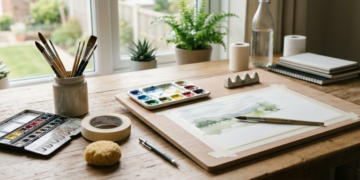
Facing untouched paper often triggers the feeling that everything must look impressive. Instead of “making a drawing,” treat your opening marks like washing your hands before cooking: simple, repeatable, and low‑stakes. Draw a loose border, scatter a few circles, or lay down a quick grid of rectangles. Fill a small corner with scribbles, dots, or patterns. These marks are not decoration; their job is simply to end the silence and give your hand something to do. Once the page is no longer pristine, tension drops, ideas loosen, and adding real shapes or objects feels less risky. Over time, this predictable starting move becomes comforting—your hand remembers what to do even when your mind feels blank.
Creating a private playground instead of a performance
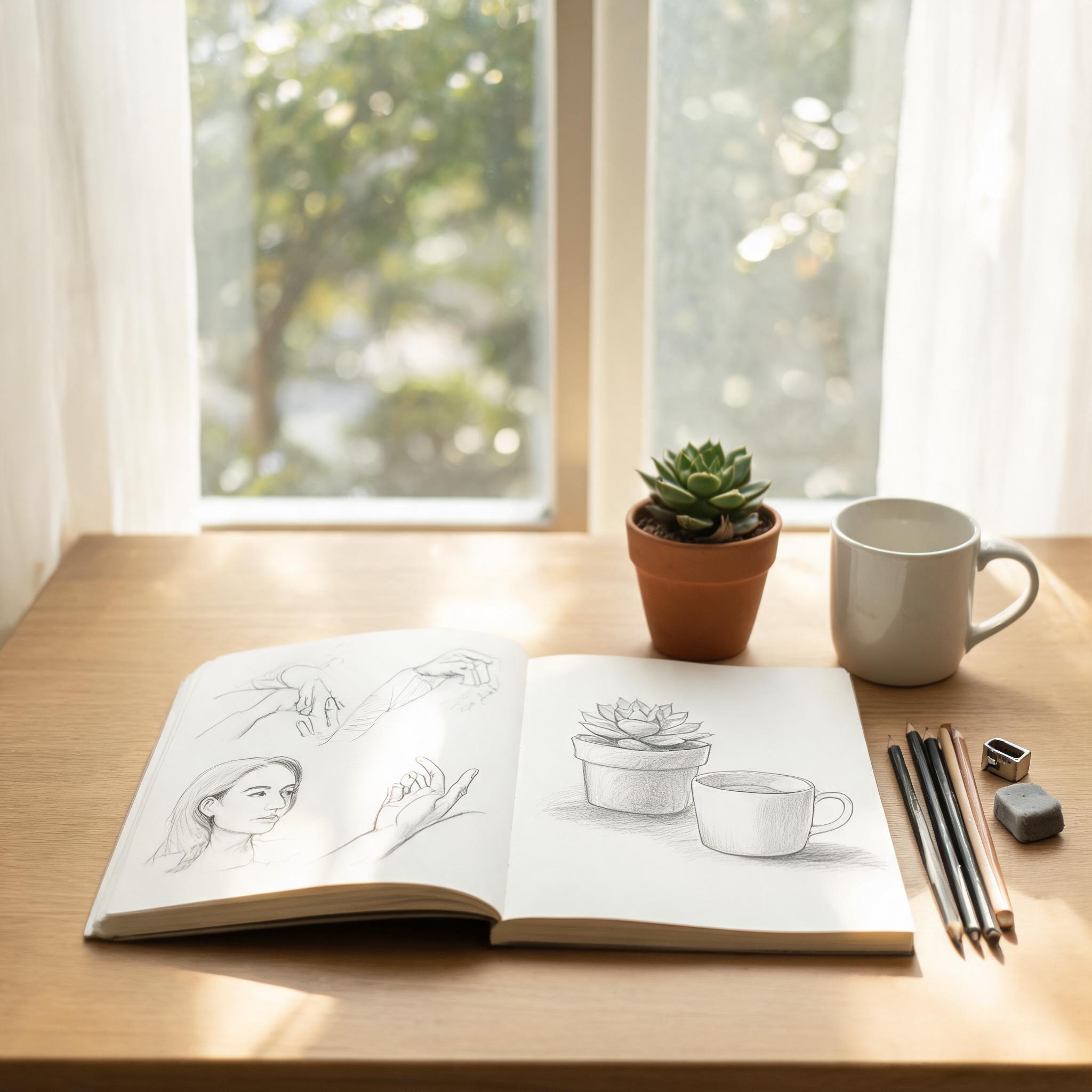
Treating each spread as a stage for flawless drawings quietly teaches hesitation. Instead, decide that your sketchbook is a playground where awkward lines, half‑finished cups, and strange experiments are all welcome guests. Promise yourself that every spread is allowed to look messy, fragmented, or “wrong.” You can even label a few pages as “test zones” to remind yourself they are for experiments only. This small mental adjustment removes the need to justify every drawing and makes opening the book feel lighter. With repetition, identity begins to shift: not someone waiting for inspiration, but someone who shows up regularly, exploring without needing proof that every page deserves to be framed.
Building Small, Reliable Daily Rhythms
Anchoring drawing to everyday habits
Long, ambitious sessions are hard to maintain; short, predictable ones slide into ordinary life more easily. Choose something you already do every day—morning drink, lunch break, evening wind‑down—and link opening your sketchbook to that cue. “When the mug hits the table, I draw for five minutes.” The cue does the remembering for you, so you rely less on motivation. Even a few minutes of quick lines or a tiny object study build real momentum when repeated often. Over weeks, this pairing turns drawing from a special event into part of the fabric of daily routine, like brushing your teeth or checking the weather before stepping outside.
Simple spaces and tiny opening / closing rituals
A small “drawing corner” strengthens the habit. Keep your sketchbook, two pens or pencils, and maybe a sharpener in one consistent spot—a side table, shelf, or bag pocket. When everything lives together, starting costs almost no energy. Add a tiny opening ritual, like writing the date, drawing a thumbnail box, or adding three random shapes before anything else. Finish with a closing ritual: circle one line you liked, add a brief note about how the session felt, or star a detail that surprised you. These micro‑rituals form bookends around your practice, helping your attention switch from everyday noise into focused play and then back out again with a small sense of completion.
| Daily cue | Tiny ritual idea | Who it suits best |
|---|---|---|
| Morning drink | One object sketch beside your cup | People who like calm starts to the day |
| Commute / waiting | Five gesture lines of passing figures | Those often on the move with spare moments |
| Evening unwind | Page of loose lines and simple patterns | Anyone needing a screen‑free cool‑down |
| Work / study break | Quick contour drawing of nearby objects | Desk‑based workers or students |
These combinations stay flexible, but having a default pairing makes “most days” far more achievable than relying on inspiration alone.
Pages That Invite Mistakes and Experiments
Breaking big pages into small practice zones
One full sheet can feel like a big commitment. Divide it into smaller territories by drawing loose rectangles, circles, or organic blobs, then treat each as its own mini playground. Tell yourself you only need to fill one box on low‑energy days. In one section, explore curves; in another, straight lines or overlapping shapes. If a small area turns out messy, the rest of the spread is still open territory. This structure makes experimenting less risky and gives you a visual record of many different attempts sitting side by side. Slowly, the focus shifts from “finishing a perfect page” to “showing up for one tiny corner,” which is easier to repeat.
Turning “ugly” pages into raw material
Pages that feel awkward often tempt people to tear them out or hide them. Instead, treat them as backgrounds waiting for another layer. Add new lines on top, shade over unwanted shapes, write brief comments about what you noticed, or glue small scraps of paper across sections and draw on those. By reusing disappointing spreads, you train your brain to see every drawing as provisional rather than final. Nothing is ruined; everything is material. This flexible attitude makes starting less scary, because you know you can always return later with new eyes and marks. Over time, a once‑hated page can become one of the most interesting layers in your sketchbook.
Simple Prompts to Keep the Pen Moving
Everyday objects and tiny observation games
Surroundings are full of ready‑made subjects: keys, cups, chargers, tools, shoes, fruit, or folded napkins. Pick one and draw it from three different angles on a single spread—front, top, and a slight side view. Keep each version small, focusing on big shapes first. On another day, create a “collection” based on a place: items from your desk, things on the bathroom shelf, or ingredients before cooking. Scatter them around the page as little vignettes. These simple games sharpen your eye for proportion and volume without demanding complex scenes or perfect perspective, making observation feel approachable even when energy is low.
Shapes, moods, and memories as backup ideas
When you feel too tired for careful observation, shift to prompts that rely less on accuracy. Give yourself five minutes with only one shape—circles, triangles, or wavy lines—and see how many ways you can stack, overlap, and cluster them. Or pick a single word that matches your mood, like calm, rushed, or hopeful, and try to express it using lines, textures, and abstract forms rather than literal objects. Another option is to sketch a tiny moment from the day: the outline of a doorway you walked through, a snack you ate, or the way a coat hung on a chair. None of these drawings need to be polished. Their purpose is to keep the habit alive and gently connect drawing to inner experience.
| Prompt type | Example focus | When it helps most |
|---|---|---|
| Object‑based | Keys, mugs, plants, shoes | When you want clear subjects to observe |
| Shape‑based | Only circles, lines, or triangles | Tired days when accuracy feels heavy |
| Mood / memory | Lines for “restless” or “sleepy” | When you want to process feelings through drawing |
| Themed collections | Items from bag, desk, or kitchen | When you crave variety on a single sketchbook page |
Keeping a running list of such prompts at the back of your book means you never have to invent an idea from scratch; you simply pick one and begin.
Growing Line Confidence Through Gentle Repetition
Low‑pressure warm‑ups for flow and control
Before jumping into careful studies, start with a minute or two of pure mark‑making. Fill a small area with long, relaxed lines that run edge to edge, then switch to loops, figure‑eights, and spirals drawn from the shoulder. Add sections of parallel lines that gradually move closer together, or rays that spread outward from a point. Because the goal is rhythm rather than accuracy, there is no way to “fail.” These warm‑ups quietly teach your hand to travel smoothly, adjust pressure, and stop where you intend. Over many days, the same easy motion begins to appear in more considered drawings, so lines look less nervous even when you feel unsure.
Contour games and layered lines
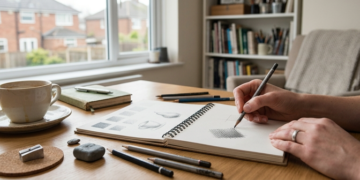
Choose a nearby object—a hand, shoe, mug, or plant—and try a quick continuous contour drawing: place your pen down, follow the edges with your eyes, and avoid lifting the tip until you reach the starting point again. The result usually looks strange, but it powerfully links eye and hand, reducing the urge to fuss over each stroke. For a softer approach, try layered drawing: sketch the object lightly first, then make a second pass, darkening only the lines that feel right and leaving the others faint. Knowing that early marks are just scaffolding takes pressure off the “perfect first line” and teaches you that finished drawings can grow through several gentle revisions instead of single, heroic strokes.
Noticing progress and staying kind to yourself
Confidence rarely arrives as a dramatic leap; it shows up as quieter changes. You might realize your hand hesitates less before starting, or that you no longer panic when a line goes wonky. Every few weeks, flip through recent pages looking for patterns rather than problems: more filled spreads, bolder marks, or subjects that used to scare you now appearing more often. When a drawing day feels rough, remind yourself that returning after uneven stretches is part of the process, not a sign of failure. Treat each new page as another opportunity to begin, not a test of worth. With time, the habit of gentle, frequent practice turns scattered marks into filled, lived‑in sketchbooks—and a steady belief that you really are someone who draws.
Q&A
- How can I structure a simple daily drawing routine that I’ll actually stick to?
Start with a 10–15 minute fixed time slot, one theme per week (e.g., objects, hands), and one constraint (single pen, small sketchbook) to keep it simple, repeatable, and low-pressure.
- What are some quick creative warm-up exercises before serious sketchbook work?
Try 2-minute gesture scribbles, blind contour drawings, filling a page with varied lines, or turning random blobs into objects—fast, playful prompts that loosen your hand and brain.
- How do I practice simple observation sketching without getting overwhelmed?
Choose tiny, everyday subjects (keys, cups, shoes), set a 5-minute timer, and focus on big shapes and angles first, ignoring detail and shading until the end or a later study.
- What’s an effective way to build line confidence instead of sketchy “hairy” lines?
Practice drawing long, single strokes from the shoulder, trace over reference lines in the air before touching paper, and redraw the same form 3–5 times aiming for fewer, bolder marks.
- How can beginners use a sketchbook to steadily build visual creativity?
Alternate days between observation (drawing from life) and invention (redesigning objects, combining forms), and keep a page of thumbnail idea boxes where you rapidly explore variations.