Why a Dedicated Homework Focus Corner Matters
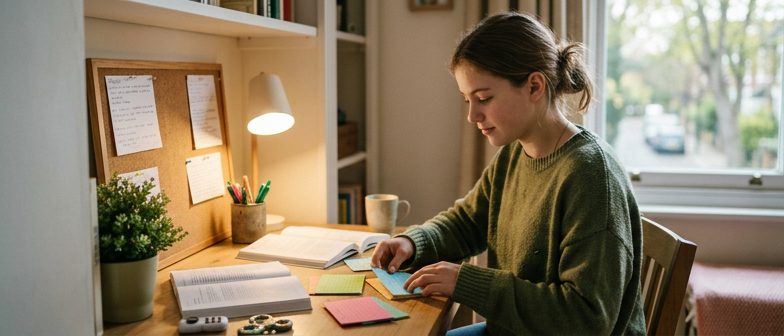
Creating a dedicated homework focus corner gives children a clear signal that this is the place and time for learning, not for play or scrolling on devices. In student study space planning, even a small desk in a quiet corner can become a powerful cue for concentration because the brain begins to associate that spot with thinking and school tasks. A defined area supports a daily homework routine by removing the decision about where to work each afternoon, which can lower resistance and stress. When students know they have a steady, calm place to sit, spread out materials, and finish assignments, it becomes easier to start on time and stay with a task until it is complete.
A simple learning environment, with limited distractions and only the essentials within reach, can also make homework feel more manageable. Instead of wandering around the house looking for supplies, students can sit down and focus because their space has been set up with intention. This kind of homework focus corner does not need to be elaborate or expensive; it just needs to be consistent, reasonably quiet, and comfortable enough to use every day. Over time, this predictable area helps children move more smoothly from free time into study time and gives parents a concrete way to support focus and homework habits.
Planning the Best Spot for a Study Space at Home
Choosing where to place a homework corner starts with how your home actually runs each day. Effective student study space planning balances quiet with some supervision, so your child can concentrate without feeling shut away. A corner of the living room, dining area, or a section of a bedroom can work if it is used mainly for schoolwork at predictable times. Notice where noise peaks, such as near the television or main walkway, and position the desk a bit away from those areas. Simple learning environment tips include using rugs, curtains, or bookcases to soften sound and visually separate the study spot from busy parts of the home, even when space is limited.
Once you have a general location, look at light, seating, and distractions. Natural daylight near a window is helpful, but turn the desk or adjust blinds to avoid glare on screens or workbooks. If the area is darker, add a small desk lamp so your child is not straining their eyes. For distraction free desk ideas, aim for a surface large enough for a notebook and a few basic supplies, but not so big that it collects toys, dishes, or unrelated devices. Keep game systems and non-school screens out of arm’s reach during homework. A comfortable, stable chair and a clear rule that this spot is reserved for learning during homework time show your child that this space is meant for focus, not play.
| Home Location Option | Best For | Noise & Distraction Level | Parent Supervision | Key Setup Tip |
|---|---|---|---|---|
| Living room corner | Younger children needing support | Moderate, varies with family activities | High, adults usually nearby | Use rugs or shelves to buffer sound and define the area |
| Dining area table end | Short, predictable homework sessions | Low to moderate outside mealtimes | Medium, visible from main spaces | Reserve a section for schoolwork and clear it at the same time daily |
| Bedroom desk nook | Older students seeking quiet focus | Low if devices are limited | Low, relies on check‑ins | Face the desk away from the bed and keep games out of reach |
| Hallway or landing desk | Families with small homes | Moderate, foot traffic nearby | Medium, quick walk‑by monitoring | Place the desk away from main walkways to reduce interruptions |
| Shared office or multipurpose room | Caregivers working while supervising | Low when other work is quiet | Medium to high, adult at another desk | Separate work zones with a small bookcase or screen to limit distractions |
Reducing Distractions Without Making Kids Feel Isolated
A homework focus corner works best when it limits distractions without cutting children off from family life. Instead of placing the desk in a closed bedroom, choose a quiet spot near the main living area where background noise is low but an adult can still be nearby. Simple learning environment tips such as facing the desk toward a wall, using a small lamp instead of bright overhead lights, and keeping only essentials on the surface help create a calm, distraction free desk that still feels warm and connected.
Parents can support healthy study habits by setting clear digital boundaries while staying available for help. Keeping phones and gaming devices in another room, turning off unnecessary notifications on shared devices, and agreeing on short check in breaks prevents constant interruptions without making the child feel watched. A small bin for school supplies within reach and a shared calendar showing homework blocks signal focused time and also that adults are ready to support the student if needed.
Setting Up the Desk and Organizing School Supplies
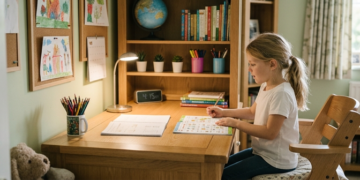
A focused Homework Focus Corner Setup starts with a desk and chair that fit your child’s body and routines. Aim for a work surface where feet rest flat on the floor or a footrest, and elbows bend at about a right angle when writing. A simple, sturdy table works well if it is the right height and leaves room for a notebook, textbook, and small lamp. Choose a child-friendly chair with a stable base and supportive back instead of one that spins and invites play. As you plan this student study space, think about how your child reaches and turns so the setup supports good posture rather than becoming a distraction.
Use distraction free desk ideas to keep the work surface as clear as possible. Reserve the middle of the desk for current homework and move everything else to the edges or to nearby storage. A small caddy or cup can hold pens, pencils, and highlighters within easy reach, while rulers, calculators, and other tools stay in a shallow box that comes out only when needed. Keep just one or two personal items to make the corner feel welcoming without turning it into a play area. Reducing visual clutter helps students focus and makes it easier to settle into a daily homework routine.
For simple School Supply Organization, build easy systems your child can manage alone. Use clearly labeled containers for everyday writing tools, art materials, and extra paper, and store them in the same spots each day. A small shelf or crate next to the desk can hold current notebooks and folders, with less-used materials placed slightly farther away. At the end of homework time, encourage a quick reset so papers go back in folders, pencils return to their container, and the desktop is cleared, helping your student see this Homework Focus Corner Setup as a calm, reliable place to learn.
Practical Storage Systems Kids Can Actually Use
For school supply organization to truly support a homework focus corner, storage has to be simple enough that children can use it without reminders. Open bins, shallow trays, and small desktop caddies work better than deep drawers where items disappear. Group supplies by task, such as a reading basket with highlighters and sticky notes, or a math box with pencils, erasers, and a basic calculator. Labeling containers with clear words or pictures helps younger students see where things belong and keep the study space usable with very little adult supervision.
Building a Consistent Homework Routine Around the Space
Once the homework focus corner is set up, link it to a predictable daily homework routine. Children concentrate better when one specific area is always used for studying, not for play or screens. Create a consistent start ritual in that spot, such as sitting down at about the same time each day, turning on the same desk lamp, and opening a planner or assignment sheet. Over time, these cues signal that it is time to work, so the Homework Focus Corner Setup supports focus instead of distraction.
Parents and caregivers can support study habits by helping students break homework into manageable blocks that fit the calm feel of the space. At the start of each session, the student can quickly review assignments, choose the first task, and place only the needed materials on the desk to keep visual clutter low. Adults can stay nearby without hovering, check in briefly to answer questions, suggest short movement breaks between tasks, and remind the child to return to the same seat and layout after each pause.
End each session with a short closing routine that keeps the corner tied to productive work. A simple checklist can prompt students to review what is finished, pack completed work into the school bag, return supplies, and leave the desk ready for tomorrow. Repeating the same final action, such as turning off the lamp or closing a notebook, marks a clear stop and makes it easier to begin again the next day, gradually building independence and steady learning.
Q&A
-
Why does a dedicated homework focus corner help children concentrate?
Using the same desk every day trains the brain to link that spot with schoolwork. It removes the choice of where to sit, lowers resistance to starting, and makes it easier to stay on homework until it is done. -
How can I plan a study space in a small home?
Pick a quiet corner that still lets you supervise, such as one side of the living or dining area. Use a rug, curtain, or bookcase to soften noise and visually separate this student study space from the rest of the room. -
What makes a desk feel distraction free?
Face it toward a wall, use a small lamp, and keep only essential supplies on top. Avoid spinning chairs and keep phones, tablets, and other devices off the desk unless they are truly needed for homework. -
How can I organize school supplies so my child uses the system?
Use open bins, trays, or a simple caddy instead of deep drawers. Group items by task, label containers with words or pictures, and keep daily tools within easy reach so your child can put things away alone. -
How can parents support a daily homework routine in this corner?
Set a regular start time, repeat a short setup ritual, and stay nearby but not hovering. Calm check‑ins, encouragement, and consistent expectations help the space signal that it is time to learn.