Creating Spaces Where Children Want To Read
Starting from places kids already enjoy
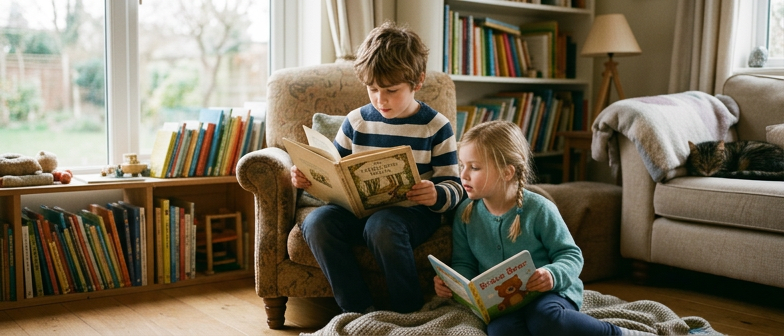
Inviting reading spots work best when they grow out of what children already do. Notice where your child tends to settle: a corner of the couch, a patch of carpet near a window, or the space beside a bed. That familiar spot can double as a place for books.
The setup does not need to be elaborate. A soft place to sit, steady light, and a small basket or box of books are enough. When stories are within arm’s reach, children are more likely to pull one out during quiet moments. Keeping the space calmer than the rest of the room helps it feel like a break from noise and screens.
For babies and toddlers, sturdy pages, bright colors, clear pictures, and simple textures invite grabbing and exploring. For older children, including comics, joke collections, short chapters, or simple factual titles keeps something familiar and “easy” in the mix.
Making the nook feel special but relaxed
A reading corner can feel inviting without being fancy. A blanket over a chair, a cluster of pillows on the floor, or a small play tent can signal, “This is where we look at stories.” Inviting children to choose a pillow, a soft toy “reading buddy,” or a homemade name sign helps the spot feel like it belongs to them.
Linking the space to small, predictable habits works better than strict rules, such as “one story after snack” or “a few quiet minutes here before bed.” Short picture books, a couple of pages, or just looking at pictures together all count as real reading time.
When you notice your child using the spot, you can gently comment without turning it into a performance.
| Reading spot element | Why it helps children use the space | Simple ways to add it |
|---|---|---|
| Soft seating | Makes staying put feel comfortable | Cushion, folded blanket, beanbag |
| Easy-to-reach books | Reduces effort and hesitation | Low basket, box, or short shelf |
| Personal touches | Builds a sense of ownership | Name sign, favorite toy, chosen pillow |
| Gentle lighting | Signals calm, quiet time | Small lamp or steady natural light |
Letting Stories Flow Through Daily Life
Turning everyday tasks into short story moments
Stories do not have to wait for a long stretch on the couch. They can slip into quick transitions in the day. While a child gets dressed, a parent might turn a shirt into a “superhero cape” and describe a tiny adventure. In the kitchen, reading recipe steps out loud, spotting letters on packaging, or naming ingredients can turn routine jobs into mini print moments.
Having books in several places around the home makes this easier. A small basket in the living room, a slim stack near the table, or a few picture books in a hallway can encourage quick dips into reading. When books sit beside toys rather than hidden away, picking one up can feel like just another everyday choice.
Simple tasks such as matching socks can include playful language: talking about colors, patterns, or “sock families” that belong together. Over time they show children that words and stories fit into ordinary actions.
Building calm rituals around shared reading
Many families find that a repeatable reading moment helps everyone unwind. For some, that might be bedtime. The focus can stay on connection rather than finishing a certain number of pages. On tired evenings, a few paragraphs read slowly—with time for questions or comments—is often enough.
Short reading moments can also join meals or snack times. Glancing at an illustration over breakfast or asking what a favorite character might do next while pouring a drink keeps stories alive. The predictability of “we usually share a little story now” sends a message that reading belongs in the rhythm of home life.
When adults occasionally read their own books or magazines where children can see, it shows that reading is something people choose for themselves. Over many small, repeated moments, children begin to treat books as familiar companions rather than rare school tools.
Choosing Books That Feel Comfortable And Interesting
Following the child’s lead
A comfortable match between book and child often starts with choice. Instead of always handing over a title, you might offer a small group of options and invite your child to pick. Even during a shared read-aloud, laying out two or three choices lets them have a say.
If a child keeps returning to the same book, that can be a strength. Re-reading a favorite story lets them predict what comes next, notice new details, and feel more confident. The aim is not to rush on, but to keep their interest and sense of success alive.
Some families enjoy making a light “to-read” list together. Writing or drawing a few titles and letting the child tick them off as you read can turn book choice into a small shared project.
Matching format and topic to age and curiosity
For younger children, clear images, simple ideas, and fewer words can hold attention. Repeated phrases, strong rhythms, and familiar scenes help them join in. During shared reading, pausing to point at pictures or invite them to turn the pages keeps them active.
For older or more confident readers, topics often matter as much as reading level. If a child is absorbed by animals, sports, vehicles, or fantasy worlds, stories and simple factual books on those themes can draw them in. Curiosity tends to grow when the subject connects to their experiences and interests.
Whatever the age, keeping reading social helps. Sitting close, showing interest, and talking about what is happening in the story can turn a book into a shared space.
| Child’s reading mood | Helpful book features | Adult support that fits |
|---|---|---|
| Tired or easily frustrated | Short text, lots of pictures | Read aloud more, stop early if needed |
| Curious but cautious | Familiar topics, simple language | Offer choices, praise effort, not speed |
| Energetic and playful | Rhymes, jokes, action scenes | Use voices, invite acting or sound effects |
| Deeply focused | Longer stories, connected series | Talk about patterns, characters, and themes |
Keeping Reading Light, Playful, And Consistent
Using talk and play to bring stories to life
Enjoyment grows when reading feels playful rather than like a test. Before opening a book, looking at the cover together and wondering, “What do you think this might be about?” invites prediction without right or wrong answers. Pausing to ask, “Why do you think the character did that?” or “What might happen next?” turns the story into a conversation.
Connecting the book to real life also deepens understanding: “This animal looks like the one we saw at the park,” or “This reminds me of your friend who loves building.” These comments help children link printed stories to their own experiences.
Play can spill beyond the page. You might use different voices, big expressions, or simple gestures while reading. Afterward, children might enjoy acting out scenes with toys, drawing a favorite character, or pretending to be someone from the book. Simple sound or memory games based on words or pictures from the story can add gentle skill practice while still feeling like fun.
Building small, steady habits without pressure
Consistency does not have to mean long sessions. One or two “anchor” times in the day can be enough: perhaps after dinner, before bed, or during a regular quiet moment. Keeping books in easy spots—a basket by the couch, a small stack near the bed, a few in the car—removes small barriers and invites spontaneous reading.
Letting children choose what to read, even if it is the same title again and again, builds comfort. Repetition helps them internalize language patterns and feel capable. Cozy touches like a blanket, a favorite toy, or a familiar corner make reading feel like a treat.
Not every session needs questions, games, or visible “learning.” Some days, simply cuddling up, silencing distractions, and moving slowly through a story is enough. Over time, these warm, low-pressure experiences can help children see books as a safe place to relax, explore ideas, and enjoy being close to the people they care about.
Q&A
-
How can parents turn Kids Reading Habit Ideas into realistic daily routines?
Start by adding short, predictable book moments onto habits you already have, like after snack or before brushing teeth. Keep expectations tiny, such as five minutes or one picture book. Rotate a few appealing titles in easy reach, and praise the routine itself, not speed or “level,” so reading feels achievable and relaxed. -
What makes a strong Family Story Time Routine that kids actually look forward to?
Choose a consistent time, a cozy spot, and a simple pattern, like “one shared book, one favorite song, one goodnight phrase.” Let kids help choose the book and position themselves comfortably. Keep phones and TV off so attention feels special. When parents enjoy story time visibly, children sense that emotional warmth and return eagerly. -
Are there simple Beginner Book Choice Tips for different ages and confidence levels?
Match books to attention span and interest rather than age alone. For beginners, look for clear images, repeated phrases, and topics they already love. Offer two or three choices, including very easy options for quick wins. If a book feels too hard, treat it as a read‑aloud, not a test, so curiosity stays stronger than frustration. -
How does Reading Corner Setup support Early Literacy Practice at home?
A small, consistent reading corner signals that books matter. Low baskets, soft seating, and gentle light invite kids to linger. When families keep pens, paper, or magnetic letters nearby, children naturally experiment with scribbling, letter shapes, and invented spelling. This playful exploration lays groundwork for decoding, vocabulary growth, and print awareness. -
What Fun Learning Routine supports sustainable Daily Book Time Habits?
Blend stories with light movement, conversation, and choice. You might start with a short picture book, then act out one scene, draw a favorite character, or hunt for one letter around the room. Keep the whole routine brief but frequent. Ending while kids are still engaged helps tomorrow’s reading feel like something to anticipate, not avoid.