Why Simple, Steady Practice Matters in Watercolor
Watercolor can feel exciting and intimidating when you begin, mostly because it seems unpredictable. Instead of trying to master every technique at once, it helps to focus on a few beginner watercolor practice ideas that you repeat often. Small, simple exercises reveal how water, pigment, and paper interact, so the medium slowly feels familiar instead of frustrating. As you see what usually happens when a damp brush touches the page, watercolor becomes less of a mystery and more of a process you can approach calmly and with growing confidence.
That quiet confidence grows when you build a gentle routine around your art. Calm painting habit ideas, like saving ten minutes most days for a quick sketch with a light wash, usually work better than waiting for rare long sessions. A relaxed everyday sketch and paint practice gives you space to experiment without pressure and to revisit the same strokes, shapes, and color studies often enough to notice progress. The rest of this guide follows that approach, offering practical ways to fit watercolor into daily life so practice feels sustainable and genuinely enjoyable.
Choosing Starter Watercolor Supplies With Confidence
When you are exploring beginner watercolor practice ideas, start with a small, dependable set of tools instead of a crowded shopping list. Choose a basic set of pan or tube paints with primary colors, a green, a brown, and a dark blue or black so you can begin learning simple color mixing basics without feeling overwhelmed. For brushes, a medium round, a smaller round for details, and a flat brush for washes are usually enough while you practice basic brush control. Focus on brushes that spring back to a point and hold water well, rather than special shapes or large sets you may not need yet.
Paper is just as important as paint and brushes in your first kit. Heavy watercolor paper in sheets or a pad will handle repeated layers, gentle lifting, and everyday sketch and paint practice better than thin paper that buckles. Cold-pressed paper with light texture is a good general surface while you find your style and build a calm painting habit. To keep your starter supply selection simple, add a mixing palette, two water containers, and a cloth or paper towel, then pause before buying more. This focused setup supports a steady creative routine and lets you learn how each tool behaves without overspending or chasing complex options.
| Supply Type | Best For Simple Practice | Best For Detailed Projects | Notes for Beginners |
|---|---|---|---|
| Small pan or tube set | High suitability | Medium suitability | Keeps color choices manageable |
| Limited primary color palette | High suitability | Medium suitability | Good for basic mixing exploration |
| Medium round brush | High suitability | Medium suitability | Versatile for most strokes |
| Small round brush | Medium suitability | High suitability | Helps with finer details |
| Flat brush | High suitability | Medium suitability | Useful for washes and broad shapes |
| Heavy cold-pressed paper pad | High suitability | High suitability | Handles layering and daily sketches well |
A Minimal Beginner Kit for Relaxed Practice
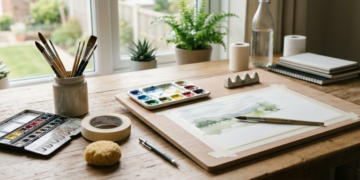
For relaxed beginner watercolor practice at home, you only need a small, thoughtfully chosen kit. A simple starter selection could be a basic set of student-grade paints with a warm and cool red, blue, and yellow, so you can explore simple color mixing without feeling overwhelmed. Add one small and one medium round brush with a good point, plus an inexpensive flat brush for quick washes, and you have enough tools to try easy brush control exercises while keeping the setup light.
Paper and a few practical extras turn these supplies into a calm painting habit you can return to often. Choose a mid-range watercolor pad that is at least medium weight so it can handle everyday sketch and paint sessions, swatches, and small studies without buckling too much. Keep a jar of clean water, a cloth or paper towel, and a firm surface together in one box so this minimal kit is always ready for short, relaxed sessions.
Color Mixing Basics You Can Practice Every Day
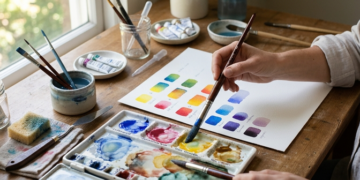
One of the most helpful beginner watercolor practice ideas is to spend a few minutes a day making small color charts. Work with three primary paints and mix them in different ratios, painting tiny squares or circles and labeling each mix. This simple color mixing practice shows how your own paints behave, which may differ from what you see in books. Over time you will notice which combinations stay bright, which turn soft and muted, and which become dull or muddy, without needing theory-heavy rules.
You can turn these simple mixing basics into an everyday sketch and paint habit. Pick a small object such as a leaf, mug, or piece of fruit, and mix its colors from only two or three paints. Before the sketch, create a narrow mixing strip on the edge of your paper, shifting gradually from one color to another. In a few strokes you can test gentle transitions, stronger contrasts, and watery transparent layers, so your eye gets used to judging how much water and pigment you need.
To keep this routine calm and sustainable, aim for short, low-pressure sessions. Give each day one simple focus, like comparing warmer and cooler versions of a color or seeing how a single mixed shade looks at three water dilutions. These small studies stay connected to your regular painting time instead of feeling like homework, so when you move on to fuller scenes, choosing colors feels like a natural extension of your quiet daily practice.
Quick Swatch Charts and Mini Color Experiments
Quick swatch charts are a simple way to explore basic color mixing without pressure. On a small sheet, paint rows of single colors, then a second row where each one is mixed with just one other shade. Add brief notes so you remember which mixes you like. This little map of your palette shows how transparent or opaque each color is, how strongly it stains, and how much water you need for soft washes versus richer blocks of color.
To turn this into an everyday sketch and paint habit, spend a few minutes testing two or three tiny color ideas before any larger piece. Drop a wet blue into a damp yellow square to watch them blend, or glaze a dry swatch with a new hue to see how layering changes the mood. These quick experiments slide easily into a calm, creative routine and build a library of references for future beginner watercolor projects.
Easy Brush Control Exercises for Steadier Strokes
Brush control is one of the most useful beginner watercolor practice ideas because it shapes how confident your lines and forms appear. Start with straight lines using a medium round brush, painting rows from the top to the bottom of your paper. Keep your wrist relaxed and move from your elbow or shoulder, aiming for even spacing and a consistent direction. Repeat the drill with curved lines, waves, and circles so you can feel how the brush responds when you change speed and direction. These calm, repetitive strokes are an easy way to warm up at the beginning of a painting session.
Next, explore how brush pressure changes the width of your marks. Load your brush with moderately wet paint, then paint slow lines that shift from very light pressure to a firm press and back to light again. Try this with different brushes so you can see how each one behaves. You can also create graded strokes by pressing down at the start of a mark and gradually lifting the brush to a fine point at the end. This exercise trains your hand to make steady, deliberate movements and supports more expressive work later on.
To connect these easy brush control exercises to real watercolor challenges, add in water control practice. Paint several rows of short strokes using different amounts of water in your brush, from almost dry to very wet, and notice when edges stay crisp and when they soften or create blooms. Touch a clean, damp brush to the edge of a wet stroke to gently soften it, then repeat with a slightly drier brush to compare results. Building this simple routine into your everyday sketch and paint time will gradually make your strokes steadier and your decisions about water and pigment more confident.
Q&A
-
How can a beginner practice watercolor without feeling overwhelmed?
Do short, repeated drills: quick color charts, rows of lines and circles, and tiny sketch‑and‑paint studies of things on your table. Keep sessions brief so practice stays light and approachable. -
What is a simple way to learn basic color mixing with a small palette?
Use a warm and cool red, blue, and yellow. Mix them in different ratios, paint small swatches, and label each mix so you see which look bright, soft, or dull and how your paints behave. -
What easy brush control exercises help steady my strokes?
Paint slow rows of straight lines, then add waves, loops, and circles. Hold the brush loosely, move from your elbow or shoulder, and aim for even spacing and similar shapes. -
How can I create a calm daily watercolor routine?
Choose a regular time, like after breakfast or before bed, and spend 10–15 minutes on one simple exercise: a color chart, a mini landscape, or a page of brush strokes, with supplies kept ready. -
What should I include in a minimal beginner kit for everyday sketch and paint practice?
Use student‑grade paints with a few primary colors, one small and one medium round brush, a basic flat brush, watercolor paper, a water container, and a simple pencil for quick sketches.