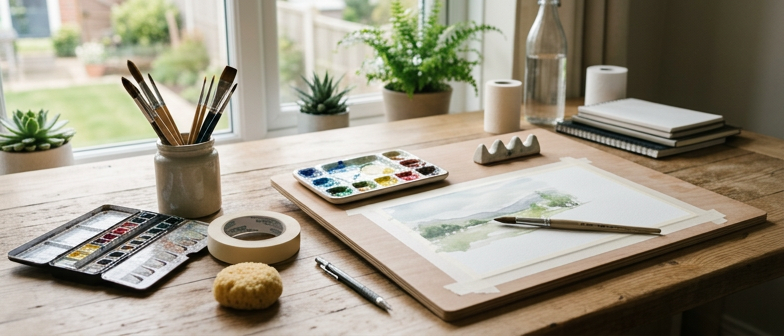
What a Beginner Watercolor Workspace Really Needs
A beginner watercolor workspace setup does not need to resemble a full studio. You only need a flat surface where you can sit comfortably, enough light to see your colors, and a place where paper and brushes can dry undisturbed. Simple home art corner ideas include using one end of a dining table or a small desk against a wall. The goal is to keep your basic tools in one spot so you are not searching for supplies and to create a space that tells your brain it is time to paint, even if you pack everything away afterward.
The mood you bring to this space matters as much as the furniture. A calm art practice routine starts with making the area feel welcoming, keeping only essentials within reach and storing extras elsewhere. A chair that supports your back, a cloth ready for spills, and a cup of clean water help the space feel orderly instead of messy. When your workspace is clear and predictable, it is easier to sit down for short, regular sessions, focus on simple experiments, and build skills without pressure to produce perfect finished pieces.
Choosing a Space and Organizing Your Art Corner
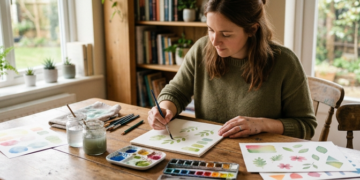
A beginner watercolor workspace setup does not need a full studio; a small, steady spot at home is enough. Choose a place where you can leave basic materials out or put them away quickly, such as a corner of a dining table, a spare desk, or a low shelf by a window. Natural light helps you judge color, but a simple desk lamp with a neutral bulb works if daylight is limited. Use a flat, stable surface so water jars and palettes are less likely to tip, and sit in a chair that lets you stay upright without hunching. When planning your home art corner, focus less on size and more on how easy it feels to sit down for twenty minutes and start painting without major rearranging.
Creative desk organization can stay simple and still support a calm, practical workflow. Keep the tools you use most in one small container for brushes and pencils, and store extra supplies in a box, drawer, or basket under or beside the desk. Stack watercolor paper, sketchbooks, and a board together so you can grab a surface quickly, and keep cloths or paper towel nearby for blotting brushes and small spills. If your space is shared, use a tray or shallow box as a portable station that holds paints, brushes, tape, and water cups in one place, so you can move your setup in a single trip and put it away just as easily.
| Home Space Option | Best For | Key Advantages | Main Limitations | Suggested Organization Tips |
|---|---|---|---|---|
| Dining table corner | Shared households | Good light, large flat surface | Needs daily setup and cleanup | Use a portable tray and one brush container |
| Small dedicated desk | Beginners who paint often | Always ready, consistent chair height | Takes permanent floor space | Keep daily tools on top, extras in one drawer or box |
| Shelf or low unit by window | People with minimal floor space | Easy access to supplies, natural light | Requires separate painting surface | Store paper, boards, and kits in labeled stacks or baskets |
| Foldable table setup | Tiny apartments or multi‑use rooms | Packs away quickly, flexible location | Less stable if overloaded | Keep a compact box holding paints, water cups, and towels |
| Rolling cart beside seat | Anyone who moves between rooms | Mobile storage, clear tool categories | Needs parking space when not in use | Assign each shelf to brushes, paper, and cleanup items |
Simple Creative Desk Organization Ideas
Thoughtful desk organization turns a basic beginner watercolor workspace setup into a place you actually want to sit down and paint. Keep the items you reach for most—paints, a few favorite brushes, tape, and a pencil—within arm’s length, and move everything else slightly farther away. Using small boxes, cups, or jars you already own, group similar tools together so each category has a clear home, which makes both setting up and tidying away feel quick and manageable.
A Simple Painting Supply List for Beginners
When you set up a beginner watercolor workspace, start with a small, reliable collection of tools instead of buying every art supply you see. A simple painting supply list includes a basic set of watercolor paints in pans or tubes, a couple of medium and small round brushes, and one flat brush for broader strokes and gentle washes. Add a pad of student-grade watercolor paper clearly marked for wet media so it can handle water without buckling too much. You will also need two water containers for rinsing and clean water, a plain white mixing surface such as a ceramic plate or plastic palette, a roll of paper towels or a clean cloth for blotting, and a pencil with a soft eraser for light sketching. These few items are enough to explore color, practice simple washes, and enjoy a calm routine of regular painting sessions without clutter or high cost.
As you arrange this starter kit in your chosen painting corner, think about how each tool supports a relaxed and practical workspace. Keep paints and brushes within easy reach so you can move from sketching to painting without searching for supplies, and store your watercolor paper flat and protected from dust. A small container or jar keeps brush bristles safe, while a steady spot for your water pots and towels makes spills less likely. By limiting your collection to these essentials, your beginner watercolor workspace setup stays tidy and focused, so you can pay attention to how paint, water, and paper interact instead of managing too many materials.
Watercolor Paper Basics and Brush Choices
In any beginner watercolor workspace, paper is a key part of a simple painting supply list. Choose paper labeled for watercolor at about 300 gsm or 140 lb so it can handle water without severe buckling. Cold-pressed sheets have a light texture that suits most learners, offering grip for washes and details, while hot-pressed paper is smoother and better for fine lines or work with ink. For a first home setup, pads and small blocks are practical because they store easily on a compact desk and keep your experiments in one place.
To keep your Beginner Watercolor Workspace Setup manageable, start with only a few brushes. A medium round can move between broad washes and basic details, a smaller round supports line work and accents, and a flat brush helps with backgrounds and crisp edges. Synthetic or mixed bristles are durable, affordable, and simple to maintain as you build brush care habits like rinsing thoroughly as you paint and gently reshaping the tip while it dries.
Brush Care Habits and Everyday Cleanup
Thoughtful brush care is a quiet but essential part of any beginner watercolor workspace setup. During a painting session, keep two water jars on your desk, one for the first rinse and one for a cleaner final swish. Gently swirl the brush in the water instead of grinding it on the bottom, and reshape the tip with your fingers or a soft cloth before putting it down. Never leave brushes sitting in water bristle‑down, because this bends the hairs and can loosen the glue inside the ferrule over time, shortening the life of your tools.
When you finish for the day, follow a short, calm routine so your space feels inviting next time. Rinse each brush until the water runs mostly clear, then wash it briefly with mild soap if you used strong staining colors. Wipe off excess moisture on a clean rag, reshape the point, and lay brushes flat on a towel to dry, or store them bristles‑up only after they are fully dry. Quickly wipe any drips around your water jars so your painting corner stays tidy and pleasant to return to.
Q&A
-
What does a beginner watercolor workspace really need at home?
Have a flat desk, a supportive chair, and decent light. Keep a small area where paper and brushes can dry safely, even if you store everything in a box afterward. -
How can I set up a tiny home art corner so it’s easy to start?
Keep daily tools within arm’s reach and stash extras farther away. Use jars, trays, or small boxes to group items so setup and cleanup stay under a few minutes. -
What’s a simple supply list for first watercolor paintings?
Use a basic paint set, two or three brushes, watercolor paper, two water jars, a white mixing surface, paper towels or a cloth, and a pencil with a soft eraser. -
Which watercolor paper should a new painter choose?
Pick watercolor paper around 300 gsm or 140 lb. This weight buckles less with wet washes, and cold‑pressed sheets balance smoothness with enough texture for control. -
What brush care habits keep watercolor brushes in good shape?
Rinse gently in two jars, reshape the tip, then dry brushes flat. Don’t leave them standing in water or store them with bristles pressed against the bottom.