Why Create a Kids Collage Craft Station
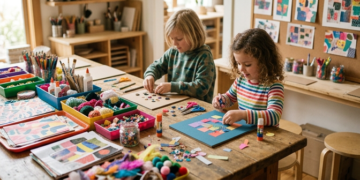
Setting up a Kids Collage Craft Station gives children a predictable place where creativity is always welcomed. Instead of hunting for glue sticks and paper every time inspiration appears, they know exactly where to go for a quick collage, a longer project, or a calm moment after school. This kind of dedicated spot makes it easier to weave a daily imaginative activity into regular routines, whether that means ten quiet minutes before dinner or a relaxed weekend morning. Because the space is always ready, kids can follow their ideas in the moment, experimenting with colours, shapes, and textures without the pressure of making something perfect.
A defined Family Art Corner also helps the rest of the home feel more organized and peaceful. When collage materials have a permanent home, it is simpler to keep shared spaces clear and to manage mess in a way that works for everyone. Adults can guide kids toward safe, age‑appropriate tools and set simple rules for cutting, gluing, and tidying up, while still allowing plenty of freedom to explore. Over time, this small, reliable corner becomes more than just a craft table; it turns into a familiar backdrop for learning new skills and shared projects that encourage connection as much as creativity.
Planning the Space and Simple Craft Table Layout
Before you buy supplies, decide where your family art corner will live. Choose a spot children can reach that does not block doors or busy paths, such as the end of a dining table, a living room nook, or part of a playroom. Check that the lighting is bright enough for detailed collage work and that the surface wipes clean easily, especially if your Kids Collage Craft Station will be a daily imaginative activity. If the area is shared with homework or meals, plan how it can quickly shift from everyday use to creative time so projects feel welcome but do not take over the whole room.
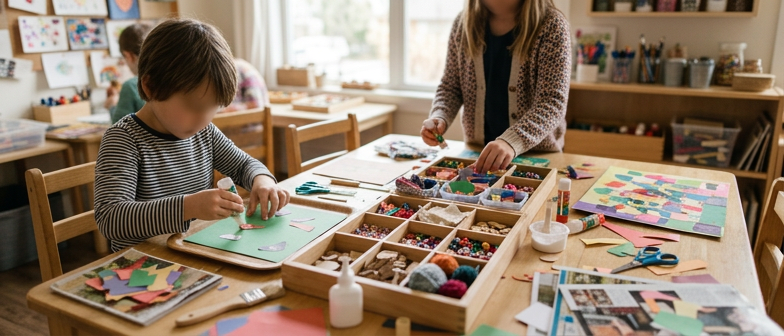
Once you know the location, design a simple craft table layout that matches your children’s height and reach. A low table or child-friendly surface keeps scissors, glue sticks, and paper scraps visible without tall, wobbly stacks. Place core collage supplies near the center and keep less-used items toward the edges so kids can see options without stretching. This kind of clear creative project setup encourages them to notice different textures and colors while reducing the chance of knocking things over.
Finally, consider how this Family Art Corner fits your daily rhythm. Leave space for an adult chair so you can sit beside children and guide them. Keep a small open area on the table for starting new ideas, even when works in progress are drying nearby, so kids never feel cramped. When the station follows real family traffic patterns and routines, it becomes a dependable, low-stress place where children can return each day to cut, paste, and build new collage creations without constant reorganizing.
| Home Layout Scenario | Recommended Craft Station Spot | Space & Traffic Fit | Simple Craft Table Layout Tip |
|---|---|---|---|
| Small apartment | End of dining table | Shared with meals, low spare space | Use portable trays and foldable mats |
| Open living room | Quiet corner near seating | Moderate traffic, mixed activities | Choose a low table with clear central zone |
| Multi-use dining area | Side section of main table | High traffic, frequent transitions | Keep supplies in a caddy for quick reset |
| Dedicated playroom | Permanent kids table | Lower traffic, longer sessions | Arrange core tools in the center, extras at edges |
| Hallway nook or landing | Slim console or wall-mounted desk | Narrow path, passing movement | Limit supplies to a few shallow bins |
Choosing Furniture and Surfaces for Craft Time
When you set up furniture for a kids collage craft station, choose a simple craft table layout that matches your child’s height and reach. A low, sturdy table with rounded corners and stable chairs helps kids spread out glue, scissors, and paper scraps comfortably so they can focus on their creative project setup instead of wobbling or tipping containers.
Protecting the work surface keeps collage sessions relaxed and easy to clean. A wipeable mat, vinyl tablecloth, or cutting board on top of the table defines a space for gluing and layering while still being smooth enough for drawing and cutting, with a small clear spot for snacks or water so art supplies stay separate.
Organizing Paper Scraps and Art Supplies
Thoughtful paper scrap organization keeps a Kids Collage Craft Station inviting instead of overwhelming. Sort scraps into broad, child-friendly groups such as colors, patterns, and textures, and use shallow trays, clear envelopes, or small open bins so children can see options at a glance. Label containers with simple words and pictures so even emerging readers can return pieces to the right spot. Keep only usable sizes and recycle torn or tiny fragments regularly so the collage area does not turn into a confusing pile and children learn that materials are valuable and finite.
Safe art supply storage is equally important, especially when different ages share the same table. Place everyday collage items like glue sticks, child-safe scissors, tape, and washable markers within easy reach in caddies or divided boxes, but keep any sharp tools, hot glue equipment, or permanent paints in closed containers stored higher up. Choose non-toxic, age-appropriate products where possible and show children how to notice safety symbols on packaging. A brief routine at the end of each session, checking lids, capping markers, and wiping the surface, keeps supplies in good condition and the craft corner ready for the next project.
To keep the overall Kids Collage Craft Station manageable for adults and intuitive for children, keep the craft table layout simple, with clear zones for cutting and gluing, arranged scraps, and a small space for finished work while it dries. Use a neutral, wipeable mat or tabletop so loose pieces are easy to spot and tidy. Rotating the selection of papers and embellishments every few weeks prevents clutter from building up and keeps the family art corner feeling fresh while still supporting spontaneous, imaginative collage sessions.
Safe Art Supply Storage for Different Ages
Thoughtful storage keeps a Kids Collage Craft Station inviting and safe. For toddlers and preschoolers, keep scissors, strong glues, and liquid paints in a closed bin or high cabinet that only adults open, while low shelves hold paper scraps, fabric pieces, and large crayons. Label each container with simple words and clear pictures so children can see which boxes they may use freely and which ones stay with a grown‑up.
As children grow more independent, adjust your safe art supply storage by creating zones: an easy‑access area for age‑appropriate glue sticks, child‑safe scissors, and washable paints, and a separate, supervised space for sharper tools or concentrated adhesives. Make a quick safety check part of each creative project setup by scanning for dried or leaking products, loose caps, and broken containers so the station stays tidy and ready for daily imaginative activity.
Encouraging Daily Imaginative Activity
A kids collage craft station becomes most valuable when it is part of everyday life rather than a rare weekend event. To encourage daily imaginative activity, keep the creative project setup simple and ready, with a few basic supplies always visible in your family art corner and the rest stored safely nearby. Short, low-pressure invitations such as placing a handful of paper scraps in a tray or leaving an interesting picture cut-out on the table can gently prompt children to sit down and explore on their own. When the space looks calm and uncluttered, even a quick session before dinner or after school can grow into a steady creative habit.
Routine helps children see the collage area as a normal part of the day instead of a big project that needs perfect conditions. You might link the station to predictable moments, like a quiet morning stretch or winding down after homework, and let kids know they can return to the same piece over several days. This relaxed approach removes pressure to finish, so they feel free to experiment, tell stories with pictures, and make playful changes. By treating the craft table as an open invitation rather than a strict schedule, the whole family can pause, add a small detail, share ideas, and keep the art corner feeling alive.
Q&A
-
Why is it helpful to create a dedicated kids collage craft station at home?
It gives children a predictable place to make art, so they can start a collage without searching for supplies and build a calm, everyday creative routine. -
How can I plan a simple craft table layout in a shared room?
Choose a wipeable surface with good light at the edge of the room, use a small caddy or trays that can be lifted away, and keep only a few essentials out at once. -
What is an easy way to organize paper scraps so kids actually use them?
Sort scraps by broad categories like color or texture into shallow, clearly labeled containers, and regularly recycle pieces that are too small or damaged. -
How should I store art supplies safely for younger and older children?
Keep sharp tools, strong glue, and liquid paints in high or latching storage, while placing paper, stickers, and thick crayons on low shelves kids can access independently. -
How can I turn our family art corner into a daily imaginative activity?
Leave a few inviting materials ready, such as a tray with scraps and glue sticks, and offer short, low-pressure moments for making, like before dinner or after school.