What Indoor Rainy Day Activity Cards Are
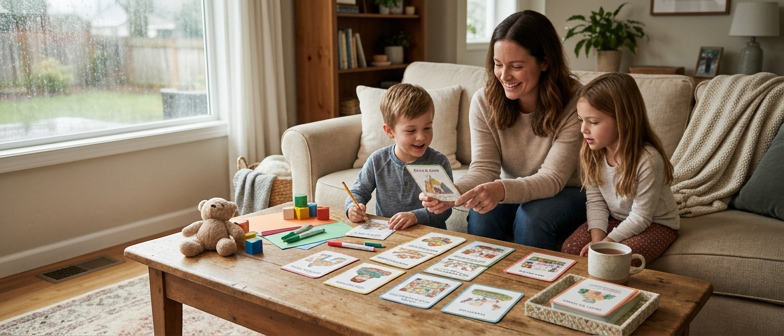
Indoor rainy day activity cards are simple prompts that suggest things children can do inside when the weather keeps them at home. Each card highlights one idea, such as a craft project, an indoor movement game, or a quiet learning task, written in clear language for both kids and caregivers. Families may print ready-made sets or create their own on paper or index cards, then keep them in a box or on a ring. When a rainy day arrives, a child or adult can pick a card and follow the suggestion, which limits time spent choosing activities and supports planning options that do not rely on screens.
Using a deck of cards can turn planning into a small, predictable routine. Adults often sort cards into groups like creative projects, movement games, or homework-friendly tasks and select a mix that fits the available time, space, and materials, as well as the child’s age and interests. Because ideas are chosen in advance, caregivers can check that each activity is practical before adding it to the collection. The cards do not ensure that every idea will suit every child, but they offer a structured starting point for organizing indoor play and learning on days when going outside is difficult.
Key Features of Effective Activity Cards
Effective indoor activity cards use clear goals, simple language, and short steps so children can follow tasks without feeling like formal schoolwork. Visual cues such as icons, color coding, or category labels show whether a card focuses on movement, crafts, quiet play, or thinking skills, which helps with printable activity planning and quick sorting by energy level or materials. Notes on optional challenges, age adaptations, approximate time, and required supplies make it easier for caregivers to fit each card into household routines, choosing versions that match attention spans, available space, and safety needs.
Designing Screen-Free Activities for Different Age Groups
When using Indoor Rainy Day Activity Cards as a planning tool, it helps to think first about age, attention span, and energy level. Younger children usually respond well to simple, hands-on prompts that focus on one clear task, such as sorting colors, building a blanket fort, or acting out animal movements. For early elementary ages, cards can introduce child friendly learning tasks that blend play with basic skills, like counting ingredients while helping with a snack or following picture-based steps to complete a small craft. Older children often appreciate more choice and complexity, so cards can suggest open-ended challenges, including designing a board game, planning a short skit, or organizing a small science experiment with common household materials. Clear language and realistic time estimates on each card help caregivers match activities to a child’s mood and the part of the day without turning play into a rigid schedule.
Printable activity planning becomes more flexible when cards are grouped by type, such as quiet focus, creative projects, and indoor movement games. Caregivers can build a simple routine by inviting children to pick one card from each group, adjusting the mix for siblings of different ages and needs. On high-energy days, prompts like stretching sequences, follow-the-leader walks around the home, or pillow-based obstacle paths allow children to move within safe boundaries. On lower-energy days, cards can steer families toward reading corners, shared drawing, or step-by-step craft ideas that encourage patience and fine motor practice. By rotating cards, noting which prompts children return to, and occasionally adding new ones based on their interests, families can keep a varied set of screen free kids activities that remains familiar yet adaptable as children grow.
| Child Age Range | Energy Level | Suggested Card Types | Planning Notes |
|---|---|---|---|
| Preschool | Low to medium | Simple sorting, pretend play, short movement games | Use one-step prompts and brief time windows |
| Preschool | High | Indoor movement games, animal actions, pillow paths | Prioritize safe spaces and quick reset activities |
| Early elementary | Low to medium | Child friendly learning tasks, small crafts, quiet focus cards | Blend basic skills with playful, visual instructions |
| Early elementary | High | Follow-the-leader walks, stretching sequences, active role play | Alternate movement cards with calmer options |
| Older children | Low to medium | Open-ended crafts, reading corners, planning-based tasks | Offer choice among several cards to increase engagement |
| Older children | High | Design-a-game challenges, skit planning, household science prompts | Estimate longer time blocks and allow collaborative play |
Balancing Learning, Creativity, and Relaxation
Indoor rainy day activity cards work well when grouped into learning, creative play, and calm downtime. Child friendly learning tasks can stay short and specific, such as reading a few sight words, counting everyday objects, or following one part of a simple recipe with an adult. Creative prompts might ask children to invent a quick game, act out a short scene, or build a small model from blocks or recycled materials. These can be balanced with quieter options like listening to a story, browsing picture books, or doing gentle stretches.
Families can think about the rhythm of the day instead of filling every minute. One pattern is to rotate cards so an educational task is followed by a creative challenge and then a relaxing activity. Adults can mark card types with colors or symbols so children see whether they are picking something focused, imaginative, or restful. This balance keeps indoor time varied while still leaving space for breaks and different energy levels.
Types of Activities to Include on Your Cards
Movement-focused cards suit children who need to use their energy indoors on wet days. Prompts can describe simple games that fit in a living room or hallway, such as gentle obstacle paths made from pillows, slow-motion dance challenges, or pretend-animal walks where kids move like cats, frogs, or turtles. You can also add quieter balance and stretching ideas, like standing on one foot while counting or reaching for the ceiling and floor. When adults choose actions, they can keep safety in mind by leaving enough space to move, avoiding slippery surfaces, and matching the intensity to each child’s age and comfort level.
Game cards can highlight imaginative play and easy challenges that do not rely on screens. These might include story-starting prompts where a child draws a card and continues a shared tale, scavenger hunts that send kids to find specific colors or shapes, or guessing games such as charades with everyday themes. Simple board or card games already in the home can be turned into prompts by listing them on separate cards and letting children draw one at random. Keeping directions short and clear helps kids understand the activity quickly and feel comfortable taking turns leading the game.
Craft and learning cards add structure to quieter parts of a rainy day. Craft ideas might range from paper collages and simple origami to homemade greeting cards or decorating cardboard boxes for pretend play. Learning-oriented prompts can focus on child-friendly tasks such as sorting objects by size, counting items around the room, writing or drawing new vocabulary words, or measuring ingredients for a basic snack with adult supervision. A mix of open-ended art projects and light learning challenges helps families adjust to different ages, interests, and attention spans while keeping the card deck varied and engaging.
Indoor Movement and Active Play Ideas
Indoor activity cards can suggest simple movement games that use household spaces and objects, such as hallway relay walks, cushion obstacle paths, or slow-motion dance challenges. These prompts encourage children to stand up, stretch, and change positions on long rainy days when outdoor play is limited. Low-impact actions like marching in place, tiptoeing around the room, or balancing while passing a soft toy support active play while staying mindful of safety and available space.
Families often use these cards as screen-free prompts that invite children to act out animals, copy a short sequence of movements, or hold a quiet yoga pose. Caregivers can adapt each idea to a child’s age and comfort level, adjust how long it lasts, and clear the play area of tripping hazards. By rotating different prompts across the day and mixing energetic cards with calmer tasks, indoor play can stay varied and engaging.
Q&A
-
What are indoor rainy day activity cards and how do families use them?
They are small prompts describing simple indoor activities. Families keep them in a box or on a ring and let a child pick a card when stuck inside, then follow the idea for play, crafts, or quiet time. -
What makes an activity card clear and kid friendly?
Short sentences, a single main task, and a few simple steps help. Visual cues such as icons or color bands show whether the activity is active, creative, or calm, so children and adults can choose quickly. -
How can I design screen‑free cards for different ages?
For younger kids, keep tasks very concrete and brief. For elementary ages, mix play with basic skills. For older children, offer open‑ended choices like designing a game or project with more independence. -
What are some examples of indoor movement games that fit on a card?
You might include marching in place, slow‑motion dancing, tiptoe treasure hunts, or cushion obstacle paths, with reminders to clear space, avoid slippery floors, and match intensity to the child. -
Can these cards support learning without feeling like schoolwork?
Yes. You can add short tasks such as counting objects, reading a few words, or helping with one step of a recipe, keeping them playful and limited in time so they feel like games, not lessons.