What Is Paper Collage and Why It Matters in Art
Paper collage is a type of collage art in which images and textures are built by cutting or tearing paper and fixing it to a surface such as cardboard, canvas, or wood. Artists use materials like magazine pages, construction paper, tissue, packaging, or hand-painted sheets to form abstract designs, landscapes, portraits, or graphic patterns. This approach grew alongside modern art in the early twentieth century, when everyday printed matter began to appear alongside drawing and paint. It is now common in classrooms, design studios, and homes because it is low cost, uses familiar tools, and works for many ages and skill levels.
This medium matters in contemporary art and daily creative practice because it offers an approachable way to study composition, color relationships, and visual narrative without relying on advanced drawing or painting skills. Layering paper supports experimentation with scale, overlapping shapes, and contrasting textures, helping learners grasp design principles such as balance and emphasis. For hobby use, it allows people to reuse printed materials and personalize journals, cards, or décor. For professional work, paper collage can be combined with photography, painting, or digital printing to explore ideas or create finished pieces. Its durability, however, depends on how the paper, adhesives, backing, and storage conditions handle moisture, light, and physical wear.
Core Materials and Tools for Paper Collage
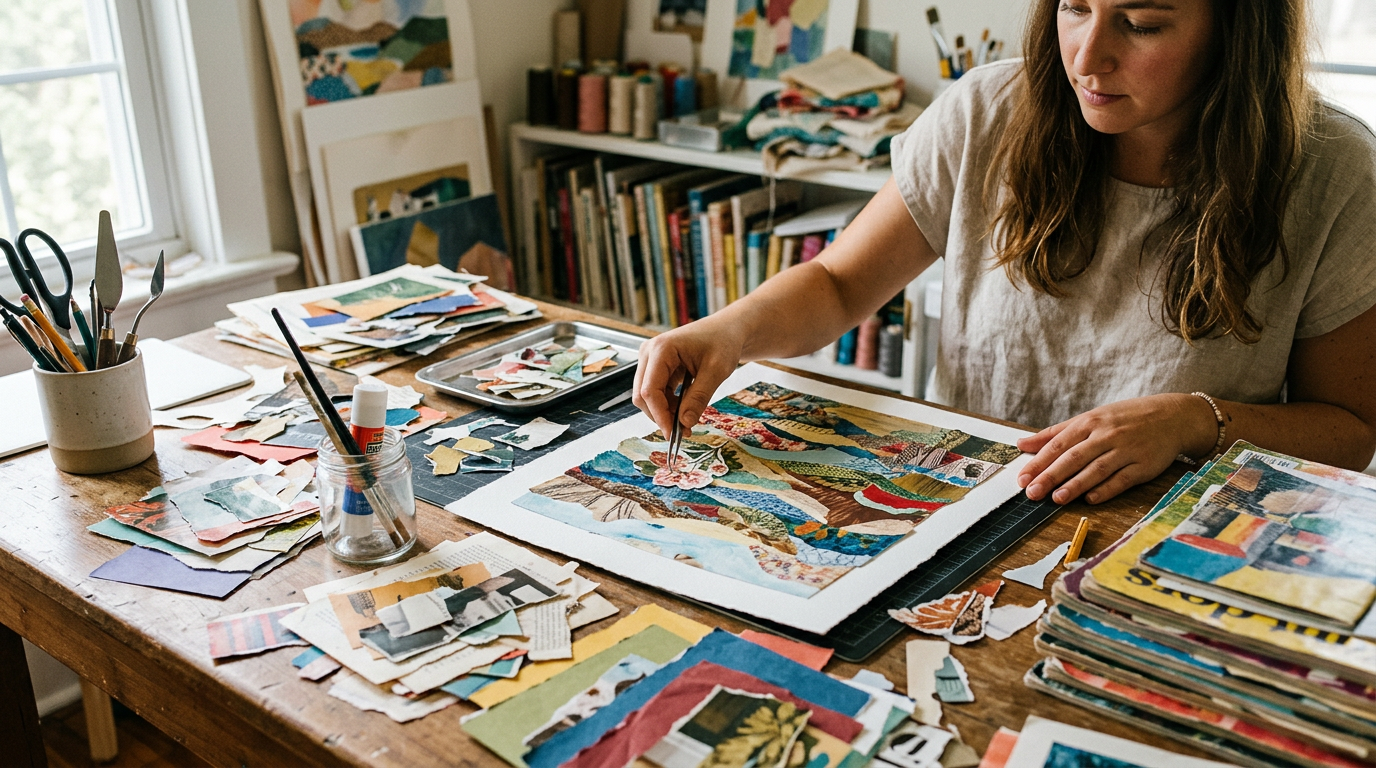
Paper collage usually begins with a mix of papers, a backing surface, and simple tools for cutting and gluing. Artists often combine printer and construction paper with magazines, catalogs, junk mail, maps, and packaging to get varied colors and textures. Lighter sheets cut easily and layer smoothly, while sturdier options like cardstock or watercolor paper support collages that need more strength. These pieces are arranged on drawing paper, cardboard, illustration board, or canvas panels, chosen for how rigid and durable the finished work should be. Everyday papers can fade or become brittle, especially in strong light or humidity, so longer‑lasting results depend on more archival materials and careful storage.
Basic hand tools help shape the paper and control how it is attached. Scissors provide clean, simple cuts, and craft knives with a cutting mat are useful for fine details or very straight edges, with extra care needed when children are present. Common collage adhesives include school glue sticks and white liquid glue, although these can wrinkle thin paper or dry unevenly. Many artists therefore look for acid‑free or archival adhesives and gel mediums to reduce yellowing and improve bonding. Brushes, small spatulas, or old cards can spread glue in thin layers and press out air pockets, and tools such as a brayer or rolling pin help keep the surface flatter as the collage dries.
| Collage Adhesive Type | Bond Strength | Paper Wrinkling Risk | Flexibility When Dry | Typical Use in Paper Collage |
|---|---|---|---|---|
| School glue stick | Low to medium | Low | Medium | Quick layouts, thin paper layers |
| White liquid glue | Medium to high | Medium to high | Low to medium | Heavier paper, small areas, budget projects |
| Archival liquid adhesive | Medium to high | Low to medium | Medium | Longer-lasting collages, mixed paper weights |
| Gel medium | High | Low | High | Layering paper, textured surfaces, more durable work |
| Spray adhesive | Medium | Low | Medium | Even coverage on large flat pieces with ventilation care |
Choosing and Using Collage Adhesives Safely
Adhesives influence how layered paper collages age, so testing on scraps helps you see strength, flexibility, and surface changes. Glue sticks are simple for light papers and quick classroom work, while liquid white glue suits heavier pieces but can wrinkle thin sheets unless spread in a very thin, even coat with a brush or card. For more durable layering, gel mediums and archival pastes usually dry clear and remain flexible, though they may alter gloss and cost more. Avoid solvent sprays in small or poorly ventilated rooms and keep them away from children. Whatever you choose, close caps, clean nozzles, protect the work surface, and let collages dry flat and undisturbed to limit curling and unwanted sticking.
Fundamental Paper Collage Techniques
Basic paper collage work starts with how you form edges. Cutting with scissors or a craft knife produces crisp, graphic shapes suited to geometric designs or clear subjects, while tearing paper by hand gives softer, irregular borders that suggest movement or more organic forms. Changing the direction of the tear, rotating shapes, and combining straight and rough edges keeps the surface from looking flat and sets up a more dynamic collage composition.
Layering paper is central to collage and helps control depth, colour relationships, and emphasis. Translucent tissues or thin printed pages placed over stronger colours can soften them and create gentle shifts in tone, while heavier papers add visible physical dimension. Many artists first arrange pieces without adhesive, moving shapes to test overlaps and pathways for the viewer’s eye. This trial layout makes it easier to spot awkward alignments, blocked empty spaces, or overly dense areas and adjust them before anything is permanently fixed in place.
Coherent composition relies on how shapes, values, and textures interact rather than on individual scraps alone. Repeating a colour or motif in several areas can tie the image together, and leaving small portions of the backing surface visible can reduce visual crowding. Maps, envelopes, tickets, and other found papers can introduce context or narrative but may add distracting text or logos if used without editing. Different papers and adhesives respond to changes in light and humidity, so some buckling or slight discoloration can occur over time and is often treated as part of the material character of paper collage.
Torn Paper Collage for Texture and Expression
Torn paper collage uses ripped rather than sharply cut edges to create texture and visual interest in paper-based artwork. As the fibers tear, they form soft, irregular borders that catch light differently from smooth cuts, giving surfaces a more tactile and expressive quality. Artists can influence the look of each fragment by tearing slowly for long, feathered edges or pulling quickly to produce jagged shapes, and by working with or against the paper grain. Compared with precise cut-paper methods that focus on clean outlines and repeatable forms, torn paper arrangements feel more spontaneous and intuitive. People working this way often accept some unpredictability in the composition, relying on layering, overlapping colors, and suitable adhesives to secure pieces while keeping the organic edges visible.
Planning Strong Collage Compositions
Thoughtful collage composition turns scattered pieces of cut or torn paper into cohesive collage art. Before using adhesives, many artists loosely arrange elements and evaluate balance, considering how visual weight, color, and texture sit across the surface. A clear focal point, such as a dominant image or bold shape, helps organize the design, while surrounding details stay quieter to avoid competing for attention. Contrast between light and dark areas, large and small shapes, and dense and open regions makes it easier to guide the viewer’s eye. These planning habits do not fix the outcome, but they clarify how each choice may influence the finished piece.
Layering paper is central to how space and depth are perceived in collage. Broad background layers usually set up color relationships and main shapes, while mid-ground and foreground layers introduce texture and small details. Intentionally leaving some negative space, such as plain paper or simple color fields, keeps the composition from feeling overcrowded and emphasizes focal elements. Because thickness, transparency, and pattern vary between papers, testing small overlaps can show how edges, partial coverage, and adhesive use affect the surface. Planning with these physical limits in mind helps prevent buckling, warping, or loss of clarity when building up multiple layers.
Q&A
-
What makes paper collage different from other forms of collage art?
Paper collage focuses on layering cut or torn paper on a surface, using printed images, colored sheets, or hand-painted paper instead of fabric, found objects, or digital elements. -
What basic tools and materials do I need to start paper collage at home?
You typically need mixed papers, a backing surface like cardboard or drawing paper, scissors or a craft knife, and a suitable adhesive such as a glue stick or liquid white glue. -
How do torn paper techniques change the look of a collage?
Torn paper creates soft, irregular edges that add texture and a more expressive feel, compared with the crisp, graphic shapes made by cutting with scissors or a knife. -
What should I consider when choosing collage adhesives for layering paper?
Check how the glue affects wrinkling, flexibility, and gloss. Glue sticks suit light papers; thin coats of liquid glue or gel medium work better for heavier, layered compositions. -
How can I plan a strong collage composition before gluing?
Arrange pieces loosely first, look for a clear focal point, and balance color, value, and texture so that some areas stay quiet while others guide the viewer’s eye.