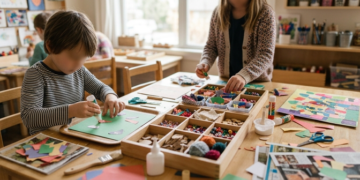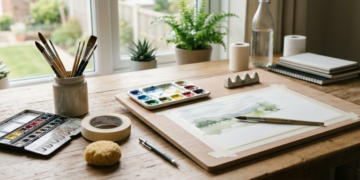
Why Create a Kids Collage Craft Station
Setting up a Kids Collage Craft Station gives children a clear, welcoming place where art is expected, not an afterthought. Instead of hunting for scissors, glue, and paper each time, your child knows exactly where to go when they want to cut, glue, and layer images and textures. This predictability makes collage a daily imaginative activity rather than an occasional treat. Even a small table or corner can signal that creativity has a regular home in your living space, helping children see their ideas as worth returning to day after day.
A dedicated collage area can also grow into a relaxed family art corner where adults and kids sit together and make things side by side. Because the space stays set up, it is simple to join your child for a few minutes after school or in the evening without big cleanup or preparation. Over time, these short shared moments of cutting and pasting pictures or scraps can support conversation, calm routines, and a sense of connection. The goal is not perfect projects, but a dependable spot that quietly encourages creativity, experimentation, and time together.
Planning the Space for a Family Art Corner
Before you buy supplies for a Kids Collage Craft Station, decide where a Family Art Corner can realistically fit into your home. Choose a spot where a simple craft table layout will not block doorways or walkways, such as the end of a dining table, a low console along a wall, or a small desk by a window. Good natural or overhead light helps kids see colors and details, and easy-to-clean flooring under the table makes glue drips and paper scraps less stressful. Picking a place visible from the kitchen or living room lets adults supervise daily imaginative activity while doing other tasks.
Once you have a location, plan a creative project setup that matches how your family uses the room. In a shared living space, you might prefer a compact table and a single rolling cart that can be tucked away when guests arrive, while a playroom might allow a table that always stays out. Think about how many children will use the space and give each a clear work area, even if it is just a place mat or tray on the tabletop. A consistent layout helps kids know where to sit, where to place collage materials, and how to return items when finished.
The final step is to decide where tools and materials will live so the Family Art Corner feels inviting rather than cluttered. Store frequently used collage basics in shallow bins or low shelves that children can reach, and keep supplies that need more supervision on higher shelves for safe art supply storage. Aim for a simple craft table layout with a clear center space for making, one side for organized supplies, and another side for drying projects, so short art sessions easily fit into your family routine.
| Home Space Scenario | Simple Craft Table Layout Idea | Storage and Organization Approach | Best For |
|---|---|---|---|
| End of dining table | Removable placemats as work zones | Slim bin or caddy stored on nearby shelf | Families sharing one main table |
| Playroom corner | Permanent kid-height table and chairs | Low open shelves with labeled bins | Homes with frequent art sessions |
| Small apartment nook | Narrow desk by a window | Rolling cart that tucks into a closet | Limited space and flexible use |
| Living room wall console | Fold-out surface or tray setup | Baskets under console for paper scraps | Supervised creative time near adults |
| Kitchen-visible spot | Compact table with clear center area | Shallow trays for daily collage basics | Caregivers multitasking nearby |
Simple Craft Table Layout Ideas
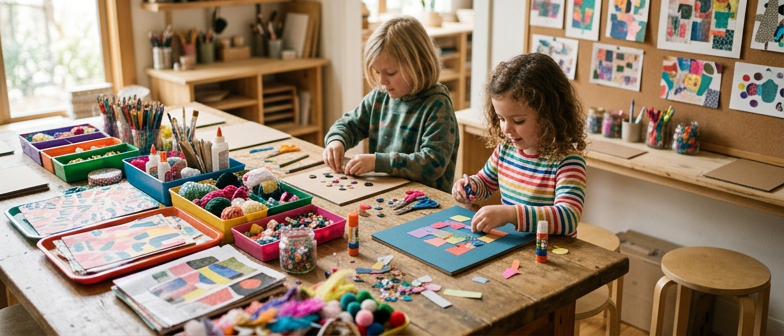
When you set up a Kids Collage Craft Station, start with a clear, sturdy table that leaves open space in the center for gluing, cutting, and arranging scraps. Keep the surface simple by placing only daily essentials on top, such as a glue stick holder, a small cup for kid-safe scissors, and a shallow tray for current collage pieces. Move extra supplies like markers, stickers, and background paper to the edges or a nearby shelf so children can reach what they need without crowding their workspace. This kind of streamlined creative project setup makes it easier for kids to focus on building their pictures instead of hunting for materials.
To keep the layout practical, think in zones that follow how kids move through a project. One side of the table can hold sorted paper scraps and collage materials, while the opposite side is reserved for finished or drying artwork so pieces do not get smudged or lost. Frequently used tools should stay within easy reach, while less-used items can sit in labeled containers beneath the table. This simple, repeatable arrangement supports a predictable crafting routine and helps children sit down, explore materials, and clean up with minimal help.
Safe Art Supply Storage for Kids
Thoughtful storage turns a kids collage craft station from a messy table into a safe, inviting place to create. Start by sorting supplies into two groups: materials children can use freely and items that need adult supervision. Child-friendly basics such as blunt kids’ scissors, washable glue sticks, paper scraps, stickers, crayons, and non-toxic markers can stay at child height in sturdy containers with smooth edges. More hazardous tools, including hot glue guns, sharp cutters, strong glues, and aerosols, should be stored out of reach in closed boxes or a latched cabinet so young artists can explore without accessing anything unsafe.
Within the main kids collage craft station, storage should make it easy for children to see what is available and put it back again. Clear bins, caddies, or shallow trays labeled with simple words or pictures help them recognize where paper, collage materials, and basic tools belong. This type of safe art supply storage lets a child set up and tidy the creative project area with minimal help and keeps the craft table surface open for making things. Avoid overstuffing containers, keeping only a manageable amount accessible and rotating extra materials from a higher shelf when needed.
Because collage projects often include many small pieces, think about choking risks and overall household safety. Store small beads, buttons, sequins, and similar embellishments in tightly closing containers that adults bring down for supervised sessions, especially around younger siblings. Choose non-toxic, child-safe products, and keep cleaning sprays or strong wipes in a separate, locked spot away from the craft corner. When everyday collage items are easy to reach while riskier supplies stay clearly separated and secured, the family art area supports independent creativity without sacrificing safety.
Choosing Safe, Age-Appropriate Materials
When you set up a kids collage craft station, start by checking labels instead of guessing. Choose non-toxic supplies clearly marked for children, and pick washable glues, paints, and markers whenever you can. For toddlers and preschoolers, focus on larger collage pieces such as big buttons, chunky foam shapes, and wide paper strips that are easy to grasp and less likely to be swallowed, and avoid tiny beads, sharp metal parts, or brittle plastic that can break into small fragments.
Safe art supply storage is just as important as the materials you choose. Keep scissors, hot glue tools, and any adult-only adhesives in a separate, closed container or on a higher shelf, and place everyday collage items in clearly labeled bins so children know what they may use on their own. By matching both materials and access to each child’s age and abilities, you keep the station inviting while still maintaining a safe, well-organized craft corner.
Organizing Paper Scraps and Collage Materials
A tidy Kids Collage Craft Station starts with simple, visible systems so paper scraps feel like real materials instead of trash. Sort leftover paper into broad categories that make sense to a child, such as size, color, or texture, and use shallow bins, trays, or envelopes so pieces are easy to see at a glance. Clear containers or open baskets help kids recognize what they have, which supports an inviting creative project setup and reduces the urge to dump everything out. Labeling each container with words and pictures gives younger children clear clues about where items belong, so cleanup becomes part of the activity instead of an extra chore.
Beyond paper, group other collage supplies so children can set up a project independently and safely. Keep glue sticks, child-safe scissors, tape, and stickers in a small caddy that can be lifted onto the table when it is time to create, then returned to a shelf afterward. Heavier or messier items, such as liquid glue or glitter, can live slightly out of reach and be brought down with adult supervision, keeping the Kids Collage Craft Station accessible but still manageable. When each material has a consistent home, even very young artists can reset the space after each use, keeping the collage area ready for the next burst of inspiration.
Q&A
-
What is a Kids Collage Craft Station and why set one up?
It’s a small, dedicated spot with paper, glue, safe scissors, and collage materials where kids know they can create anytime. A consistent place makes art a daily imaginative activity instead of a rare project. -
How can I create a Family Art Corner in a small space?
Claim part of a dining table, a slim desk, or a window corner. Aim for good light, clear walkways, and an easy‑to‑wipe floor so glue, scraps, and mess are quick to clean. -
What is a simple craft table layout for collage projects?
Keep the middle of the table clear for current work. Put only daily essentials on top and keep extra markers, stickers, and paper on a nearby shelf or rolling cart kids can reach safely. -
How can I organize paper scraps so kids use them?
Sort scraps by size, color, or texture into shallow trays or clear bins. Add picture‑based labels so children can see options fast and return everything to the right spot during cleanup. -
What are safe ways to store art supplies for young children?
Keep blunt scissors, washable glue sticks, and crayons in sturdy containers at child height. Store sharp tools, strong glues, and sprays in closed, high cabinets that only adults open.