What Hand Embroidery For Beginners Involves
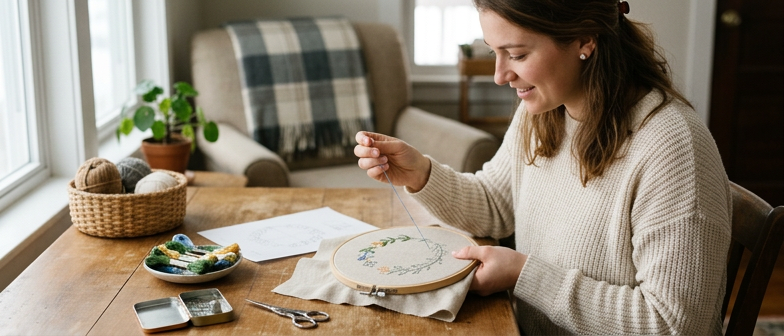
Hand embroidery for beginners usually involves learning a few simple stitches, working with affordable materials, and focusing on control rather than speed. A first project is often a small flower, letter, or border stitched on a cotton fabric square. Instead of aiming for a perfect result, this project helps you feel how the needle passes through the fabric, how firmly to pull the thread, and how basic stitches build shapes and textures. Learning speed differs from person to person, and it is normal for early stitches to look uneven or for the fabric to wrinkle while you get used to handling hoop, needle, and thread together.
Many beginners start with an embroidery practice sampler, a fabric piece filled with rows of simple stitches and tiny motifs used only for learning. This kind of project lets you repeat the same movement until it feels natural, without worrying about visible mistakes on a display item. Short practice sessions help limit hand strain and eye fatigue, and new stitches are added gradually as confidence grows. Progress is usually steady but modest, so consistent practice over days or weeks is more realistic than expecting advanced results in a single weekend.
Choosing Fabric, Hoops, and Threads
For hand embroidery beginners, fabric choice affects how easy it is to place stitches. Woven cotton, quilting cotton, linen, and cotton blends are popular because they are stable and not too slippery. A light or medium weight fabric lets the needle pass through easily and the weave is visible enough to guide straight lines. Very stretchy knits, sheer fabrics, or very dense cloth can be harder to control and may need extra stabilizing. It is helpful to wash and dry the fabric the way you will care for the finished piece, because shrinkage or color bleeding after stitching is difficult to correct.
An embroidery hoop keeps the fabric evenly tensioned so stitches stay neat. Simple wooden or plastic screw hoops are usually enough when learning, as long as they hold the fabric snugly without distorting it. To set up, loosen the outer ring, lay the fabric flat over the inner ring, then press the outer ring down and tighten the screw while gently pulling the fabric until it feels firm, like a drum but not stretched out of shape. Over tightening can leave marks or warp delicate fabric, so adjust gradually.
For thread, many beginners use six strand cotton floss because it is widely available, inexpensive, and can be separated into finer strands. Using more strands makes bolder lines, while fewer strands create finer details, so one skein can serve different parts of a practice sampler. Pearl cotton and other specialty threads offer different textures and sheen but may catch more easily on rough fabric or dry hands. Colorfastness and care instructions on the label matter if the finished work will be washed, so testing a small sample with your chosen fabric, hoop tension, and thread helps you understand how they behave together.
| Material type | Ease for beginners | Typical use | Notes |
|---|---|---|---|
| Medium woven cotton | High | Practice samplers, simple motifs | Stable weave, easy needle passage |
| Linen or cotton-linen blend | Medium | Textured designs, rustic look | Visible weave, may fray at edges |
| Quilting cotton | High | Outlined patterns, basic florals | Holds hoop tension reliably |
| Pearl cotton thread | Medium | Bold outlines, textured lines | Non-divisible, more surface texture |
| Six strand cotton floss | High | Varied line weight in one design | Strands can be separated by thickness |
| Stretchy knit fabric | Low | Only with stabilizer and hoop | Prone to distortion, needs careful tension |
Basic Fabric Selection For Embroidery
For hand embroidery beginners, medium-weight woven cotton is usually the easiest starting fabric because it is stable and the weave is easy to see. Quilting cotton, muslin, and light linen blends sit well in an embroidery hoop and let the needle pass through smoothly, so you can focus on basic stitches instead of struggling with thick or slippery cloth. Even-weave fabrics, where threads are evenly spaced, help keep lines straight and stitches consistent while you build confidence.
Very thin, stretchy, or loosely woven fabrics are less forgiving and often reveal limits of simple hoop and stitch setups. Stretch knits and delicate sheers can distort or pucker under hoop tension unless you add stabilizer and adjust your technique. Coarse fabrics such as burlap fray and shed fibers, so edges usually need finishing. Before starting a project, test a small corner in your hoop to see whether the surface holds its shape, supports your thread, and resists fraying.
Setting Up the Embroidery Hoop and Thread
Separate the hoop rings, place the fabric over the inner ring, then press on the outer ring and tighten the screw until the fabric is smooth and firm. Aim for a surface that feels like a light drum: flat and even, but not pulled so tight that the weave distorts or leaves deep hoop marks. Gently tug the fabric in several directions as you tighten, and check a wooden hoop from time to time while stitching so changing tension does not make your lines look uneven.
For thread, use six strand cotton floss and strip it into the number of strands that suits your design, often two or three. Cut lengths no longer than from fingertips to elbow to reduce tangling and wear. Leave a short tail when threading the needle and avoid bulky knots that can show through light fabric. If the thread starts to twist, pause and let the needle dangle so it can unwind and your stitches stay flat.
Learning Basic Embroidery Stitches
Basic stitches form the foundation of hand embroidery and help you practice control before working on detailed designs. Beginners usually start with running stitch, backstitch, split stitch, satin stitch, and French knots because these lines, fills, and textured dots appear in many patterns. Early attempts often look uneven, with wobbly lines or changing stitch length, and this does not mean the technique is wrong. Hand movement, thread tension, fabric weave, and lighting all influence the result, so early practice is about noticing how these factors change each stitch rather than expecting perfect lines.
To learn each stitch, it helps to slow down and break the motion into clear steps, watching where the needle enters and exits the fabric. For line stitches such as running stitch and backstitch, aiming for regular spacing between needle holes often improves appearance more quickly than trying to copy complex motifs. For satin stitch and other filling stitches, many beginners find it hard to keep edges smooth or coverage even, especially on loosely woven fabric. Using shorter stitches, gentle tension, and working in the same direction can reduce gaps and puckering, though some distortion is still possible when the fabric is not firmly held in the hoop.
A practice sampler is a simple piece of fabric where you group different stitches in rows, shapes, and small motifs to observe progress over time. You can mark light pencil or erasable-pen guidelines for spacing, then dedicate one area to lines, another to filled shapes, and another to knots or small flowers. This sampler does not need to be decorative, and many people choose inexpensive cotton so they can experiment without worrying about mistakes. Thread tangling, knots on the back, and tired hands are common limitations, and short, repeated practice sessions often lead to steadier stitches than trying to master everything in one day.
Core Stitches to Practice First
On a beginner practice sampler, focus on a few basic stitches that show how needle, thread, and fabric work together. Running stitch is useful for simple lines and borders and helps you learn even spacing. Backstitch forms smooth outlines and simple lettering, teaching you how stitches link into continuous shapes. Satin stitch fills small solid areas; work in short sections and expect some unevenness at first. French knots or another textured stitch add raised dots, and may slip or pull through the fabric until your tension is steadier. Arrange these stitches in clearly labeled rows, using different thread colors so you can compare results and notice your progress.
Q&A
-
What is a simple first hand embroidery project?
Many beginners stitch a small flower or letter on plain cotton to learn how the needle moves and how firmly to pull the thread. The aim is steady, even stitches rather than a flawless result. -
Which fabric is best for a first embroidery piece?
Medium-weight woven cotton, such as quilting cotton or muslin, is stable and easy to hoop. Prewashing helps manage shrinking or color bleeding before you start stitching. -
How do I set up an embroidery hoop?
Lay the fabric over the inner ring, press on the outer ring, then tighten the screw while gently smoothing the cloth. The surface should feel firm and flat without stretching the fabric out of shape. -
Which basic stitches should beginners learn?
Running stitch, backstitch, split stitch, satin stitch, and French knots provide simple lines, outlines, filled areas, and texture, giving a useful foundation for many designs. -
How does an embroidery practice sampler help?
You can mark rows or shapes on fabric and assign a stitch and thread color to each. Comparing these areas over time makes it easier to see improvements in spacing, tension, and consistency.