Why Practice Cards Are Great for Watercolor
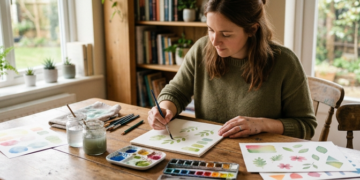
Working on small watercolor practice cards is a low-pressure way to explore new ideas without committing to a full painting. Because each card is quick to start and easy to set aside, you can test color mixes, try simple shapes, and experiment with brush strokes in short sessions. This kind of creative art practice builds confidence gradually and fits into a busy day. Focusing on a small space also makes it easier to notice how water, pigment, and paper interact, which can be harder to see on a large sheet.
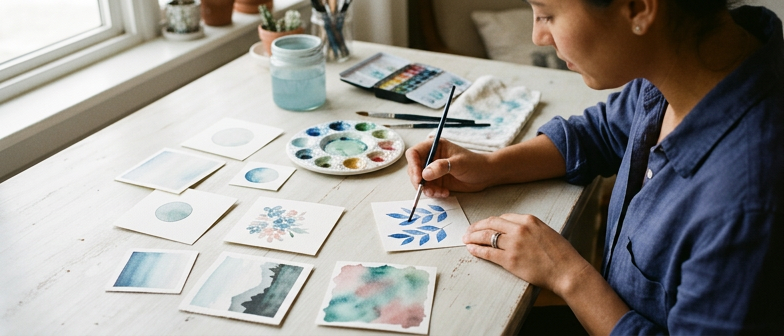
These mini projects are practical because they can become handmade greeting cards once you finish experimenting. A small floral sketch, a loose landscape, or an abstract wash can turn into a thoughtful note for a friend, so your watercolor practice card ideas are both exercises and finished pieces. This sense of purpose encourages regular painting and helps you stay motivated. Over time, a stack of cards shows your progress in watercolor, moving from tentative marks to more confident designs, and makes practice feel useful as well as enjoyable.
Basic Supplies and Setup for Practice Cards
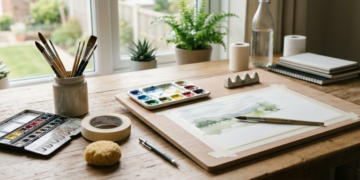
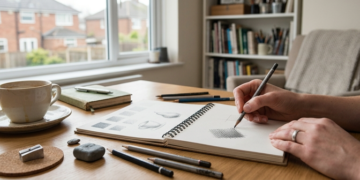
When you explore watercolor practice card ideas, keep your supplies simple so you can focus on beginner painting exercises instead of equipment. A small set of pan or tube watercolors, a cup of clean water, and a few soft brushes are enough for most creative art practice on small cards. Choose heavier paper labeled for watercolor or pre-cut blank cards so they can handle light washes without buckling. A pencil and eraser let you sketch basic layouts, and painter’s tape or washi tape can hold your card flat while you paint. With a paper towel or scrap cloth nearby for dabbing extra water or pigment, you can experiment freely without worrying much about mess.
A comfortable, uncluttered setup supports simple card design and better brush control from the start. Work on a flat or slightly tilted surface with good lighting, and keep your palette, water container, and cards where your hand can reach them easily. Many people test color mixes and brush pressure on a scrap strip cut from the same paper before painting the actual card, turning the work area into part of their creative art practice. Limiting yourself to a few colors and one or two brushes at a time reduces distraction and helps you notice how much water you use, which is essential for steady control on small practice cards.
| Supply | Role in Practice Cards | Best For | Beginner Priority |
|---|---|---|---|
| Watercolor paper or blank cards | Keeps surface stable for washes | Color wash techniques and gradients | High |
| Pan or tube watercolors | Provides limited palette for study | Beginner painting exercises | High |
| Soft round brushes | Supports smooth strokes and control | Brush control basics | High |
| Painter’s tape or washi tape | Holds card flat and creates clean edges | Simple card design layouts | Medium |
| Pencil and eraser | Helps plan composition lightly | Layout planning and spacing | Medium |
| Scrap paper strip | Safe space to test color and pressure | Creative art practice experiments | Medium |
Choosing Card Sizes and Paper Types
When you plan watercolor practice card ideas, start with small, manageable sizes such as 3 x 5 or 4 x 6 inches. These dimensions give beginners enough room for simple card design without feeling intimidating, and they are easy to fill with quick beginner painting exercises like gradients, stripes, or small florals. Smaller cards also dry faster and use less paint, so you can repeat the same exercise several times and compare how your brush control improves from card to card.
Color Wash Techniques on Small Cards
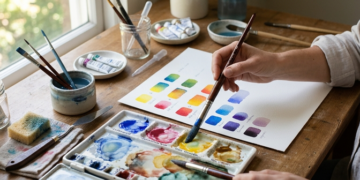
Working with color washes on small cards is an easy way to explore creative art practice without committing to a large page. A postcard or greeting card size surface keeps beginner painting exercises short and focused. Tape the card to a flat board so it stays steady, then lightly mist the surface or brush on clean water where you plan to paint. Notice how much moisture the paper holds and how pigment moves across this small area, so you can start understanding basic brush control on a compact format.
Begin with a simple flat wash. Load your brush with a generous mix of water and pigment, then pull smooth strokes from one edge of the card to the other, slightly overlapping each pass. On a small card this takes only a few strokes, so watch how quickly the paint dries and how tilting the card affects the flow. This controlled wash is a gentle way to practice brush control basics, and it also creates a quick background you can later turn into a handmade greeting card design.
After flat washes feel comfortable, move into graded and variegated washes to expand your watercolor practice card ideas. For a graded wash, gradually add clear water to your brush as you move down the card, shifting from strong color to a pale tone that suggests sky or soft light. For a variegated wash, drop a second color into the first while it is still damp and let them blend naturally. These simple exercises build confidence with water and pigment and give you flexible backgrounds for lettering or small illustrations.
Simple Gradient and Multicolor Wash Exercises
A small practice card is an ideal place to explore basic color wash techniques without the pressure of a full painting. Start with a simple gradient by loading your brush with diluted color at the top, then adding more water as you move downward so the hue fades to a soft, transparent layer. Keep your strokes even and slightly overlapping so no hard lines appear between passes, and use the finished wash as a clean, simple card design for lettering or a short note.
Brush Control Basics Through Mini Studies
Small watercolor practice cards work well as mini studies for brush control. Instead of aiming for a full painting, treat each card as a beginner painting exercise that focuses on one simple action, such as straight lines, soft curves, or evenly spaced dots. Working on a small surface helps you notice water and pigment on the brush and how the bristles touch the paper. These short sessions gradually build muscle memory so your hand feels steadier and more confident when you move on to larger pieces or detailed handmade greeting cards.
To explore brush control basics, dedicate one card to different strokes, starting with light pressure for thin lines and then pressing harder for wider marks. Use another card to change the angle of the brush and create corners, leaf shapes, or simple petals, turning repetitive drills into creative art practice. Repeating strokes in rows or loose patterns shows how consistency improves as you adjust water, color strength, and speed. Because each mini study is quick and uses little paper, it is easier to experiment, make mistakes, and try again without worrying about wasting materials.
As you grow more comfortable, these mini studies can become simple card designs that still emphasize control. A few well placed brushstrokes can suggest a branch, a band of abstract shapes, or a loose border around a hand lettered message. Each tiny composition gives you feedback on how accurately you start and stop a stroke, whether edges stay crisp or soft, and how your brush behaves when you layer colors. Treating every practice card as both an exercise and a potential finished piece keeps brushwork practice purposeful instead of repetitive.
Q&A
-
Why are small watercolor practice cards helpful for beginners?
They keep projects low-pressure and quick, so you can test color mixes, try simple shapes, and build confidence without committing to a full painting. -
What basic supplies do I need to start watercolor practice cards?
Use watercolor paper or blank cards, a small set of paints, one or two soft brushes, clean water, tape to hold the card flat, and a paper towel for dabbing. -
What card sizes work well for simple card designs and exercises?
Sizes around 3 x 5 or 4 x 6 inches give enough room for gradients, stripes, or small florals while staying easy to fill in a short session. -
How can I practice color wash techniques on a small card?
Tape the card down, lightly wet the area you’ll paint, then brush on diluted color and watch how the pigment moves as the paper absorbs the water. -
How do mini studies improve basic brush control?
By filling small cards with straight lines, curves, or dots, you focus on one motion at a time and gradually build steadier, more controlled strokes.